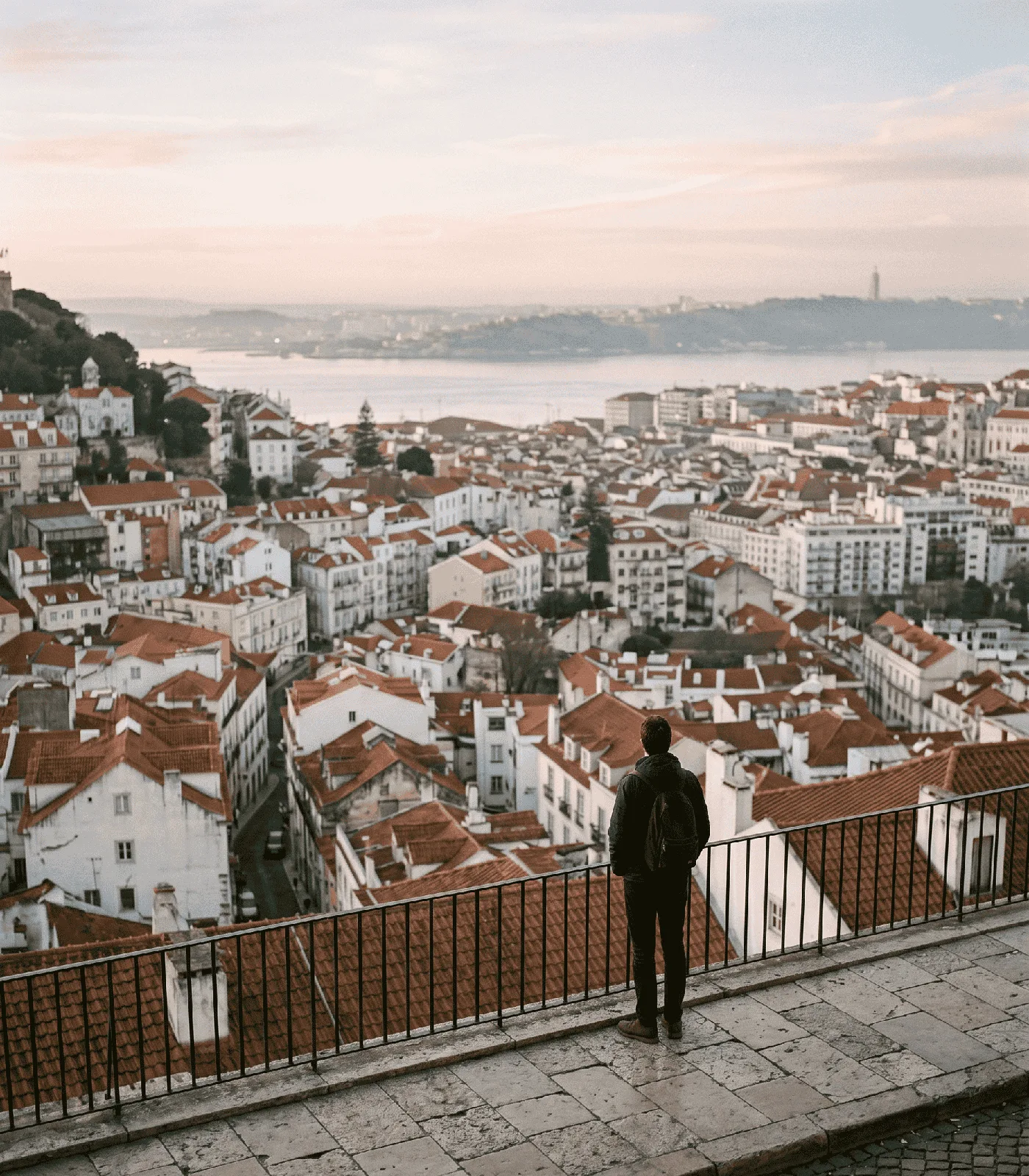
Lagos.
Work at the speed of the city.
The fastest-growing major city on earth. The energy here is not background noise — it is the working condition. Every room we worked in here stayed with us because it offered something the city doesn't: a pause.
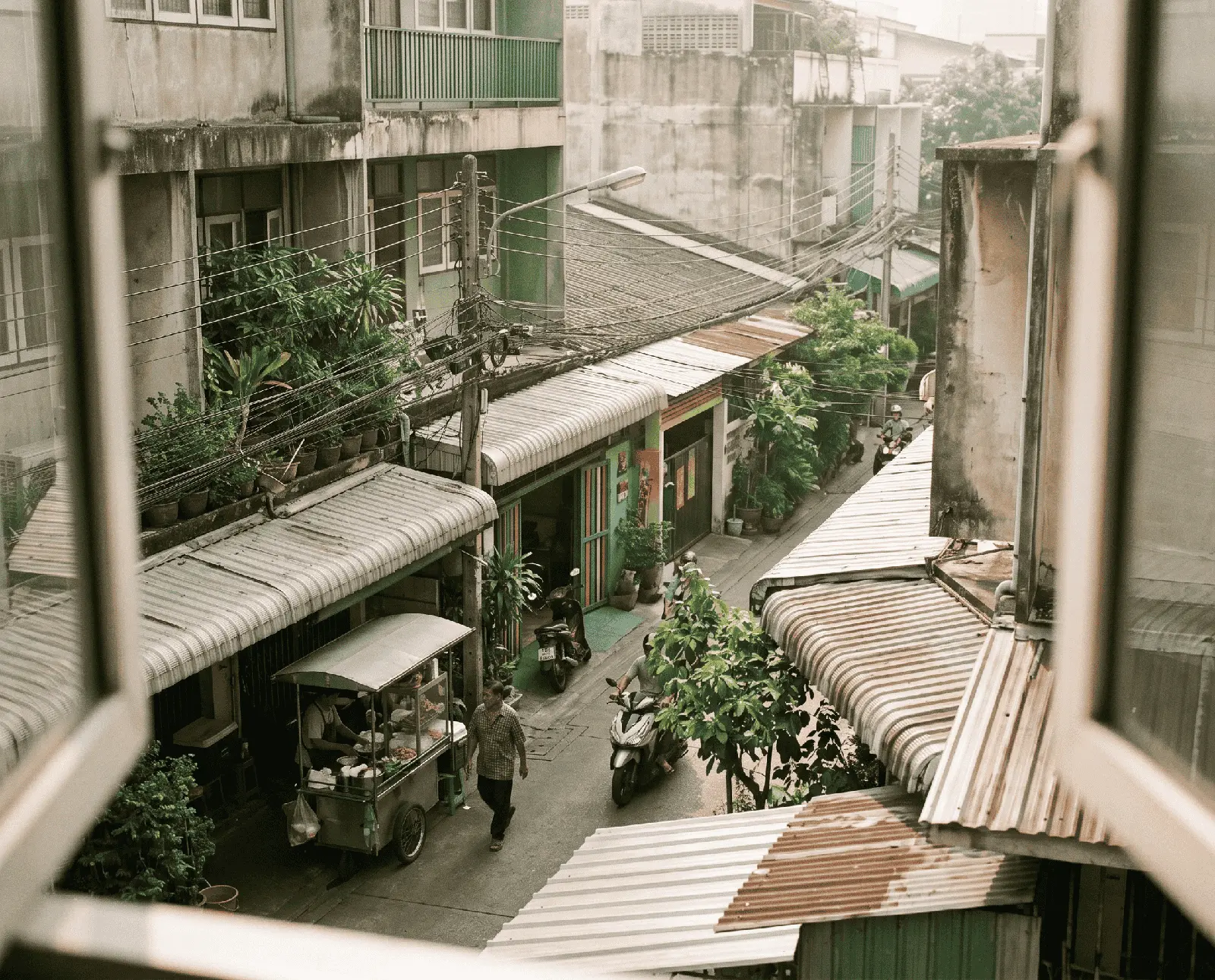
Lagos has 22 million people and is growing faster than any city of comparable size. This is not a statistical footnote — it is the texture of the city. Everything moves. Everything is loud. The traffic is not a problem Lagos has; it is a condition Lagos lives inside, the way a body lives inside weather.
We put this guide together over six months, going back again and again to the rooms our friends in the city kept pointing us toward. One of us grew up in Surulere and has lived in Lagos for more than thirty years; a lot of these choices are his. He knows the difference between a room that works and a room that looks like it works, and in Lagos — where the performance of productivity is a civic art form — that distinction matters more than anywhere else we cover.
The rooms here share one quality: they offer a specific, bounded quiet within the city's general noise. Not silence — there is no silence in Lagos — but the kind of relative stillness that lets you hear your own thoughts above the background roar. Whether this comes from a well-positioned fourth-floor room in Ikoyi, a walled garden in Surulere, or a library room above a Yaba bookshop, the effect is the same. You can work here. The city will still be there when you finish.
A note on transport: Lagos traffic is severe and unpredictable. Wherever we mention a room, we've tried to note walking time from the nearest landmark and the best way in by okada (motorcycle taxi). If you arrange to use one for a day, plan for the whole day rather than a couple of hours — needing to cross town at 3pm on a Friday is its own kind of work.
Ikoyi.
Ikoyi is the quietest neighbourhood in this guide — which is a relative statement, but in Lagos, relative quiet is a significant asset. It is a residential island neighbourhood with wide streets, mature trees, and a history of institutional and diplomatic occupancy that has left it with buildings that are, by Lagos standards, generously proportioned and well-maintained.
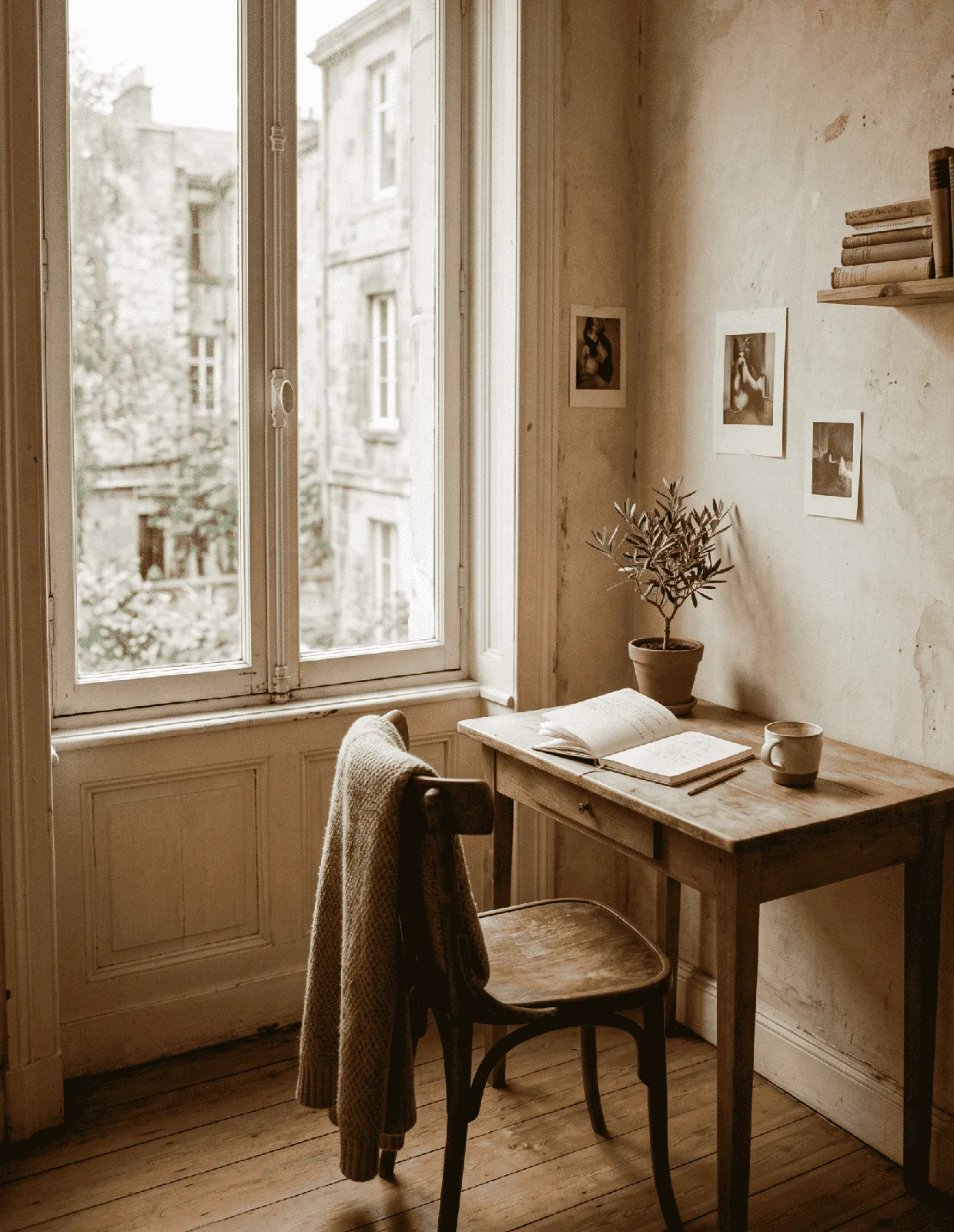
The Ikoyi rooms we remember are predominantly in the upper floors of the converted colonial and mid-century buildings that make up the neighbourhood's housing stock. These buildings have the Lagos quality of thick walls and small windows that the original architects specified for heat management and that now, in the era of air conditioning, produce rooms that are cool, quiet, and lit by carefully positioned rectangles of equatorial light.
The one we go back to is a former bedroom in a 1960s bungalow on Awolowo Road, converted into a writing room with an antechamber, a policy of absolute silence, and a shared kitchen its owner stocks every Monday with food she considers appropriate to serious work. She does not enumerate what this means. The pattern, as far as we can tell, is fresh fruit and one very good espresso machine.
Yaba.
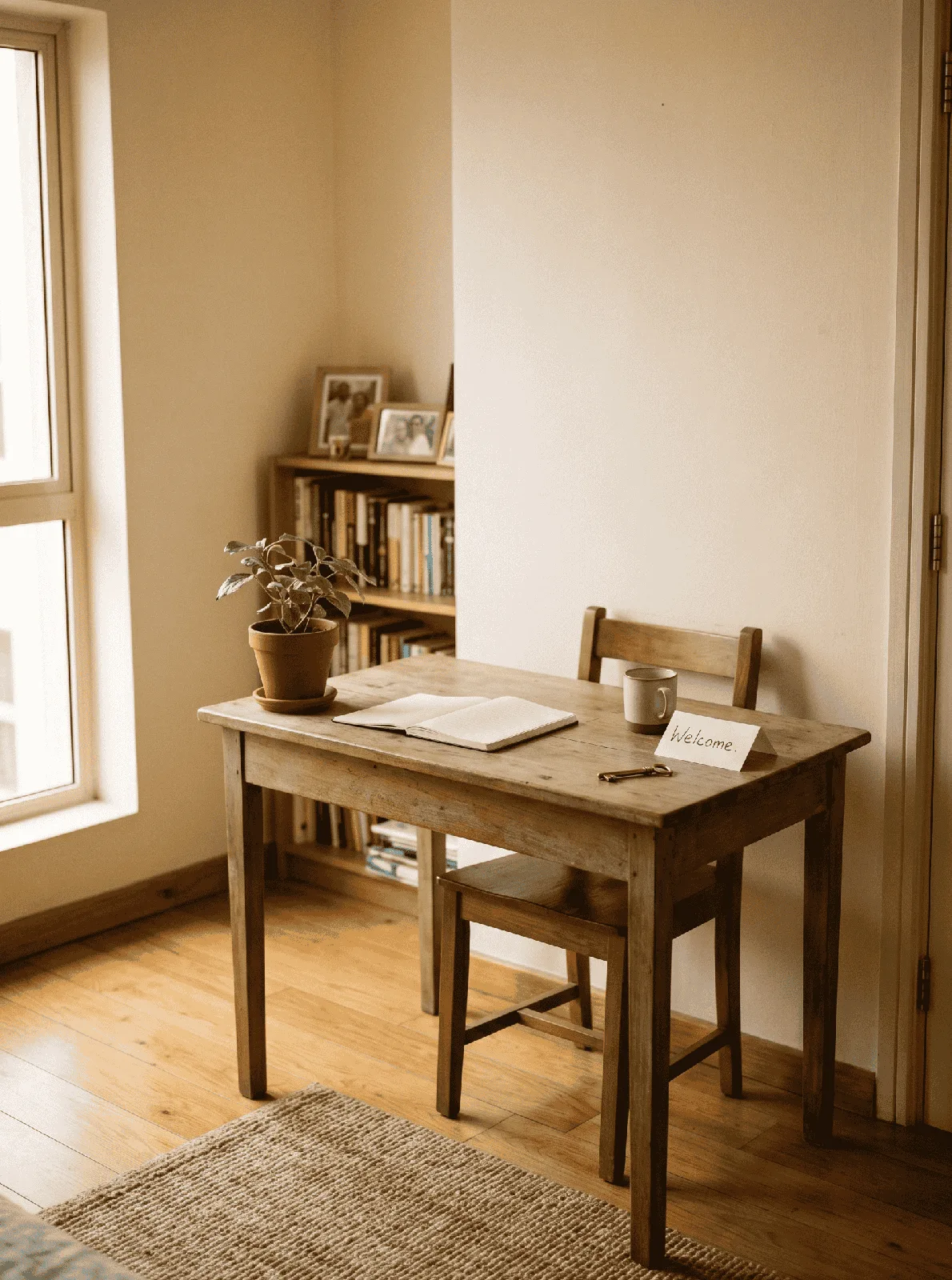
Yaba is where Lagos's creative industry lives. Not where it offices — the offices are in Victoria Island — but where the people who constitute it actually live and, increasingly, work from. The neighbourhood has a density of coworking spaces that we have almost entirely steered around in favour of the private rooms that exist alongside them: the rooftop studio above the bookshop, the top floor of the converted family compound, the retired engineer's workshop that his daughter now uses for her design practice and leaves quiet the rest of the week.
One of us grew up two streets from the Yaba room we remember best. He notes that the neighbourhood has changed significantly since his childhood but that the specific quality of a Yaba morning — the smell of generators, the sound of the bookshops opening, the light that comes over the rooftops from the east before the heat makes any direction of light irrelevant — has not changed at all. We trust him on this.
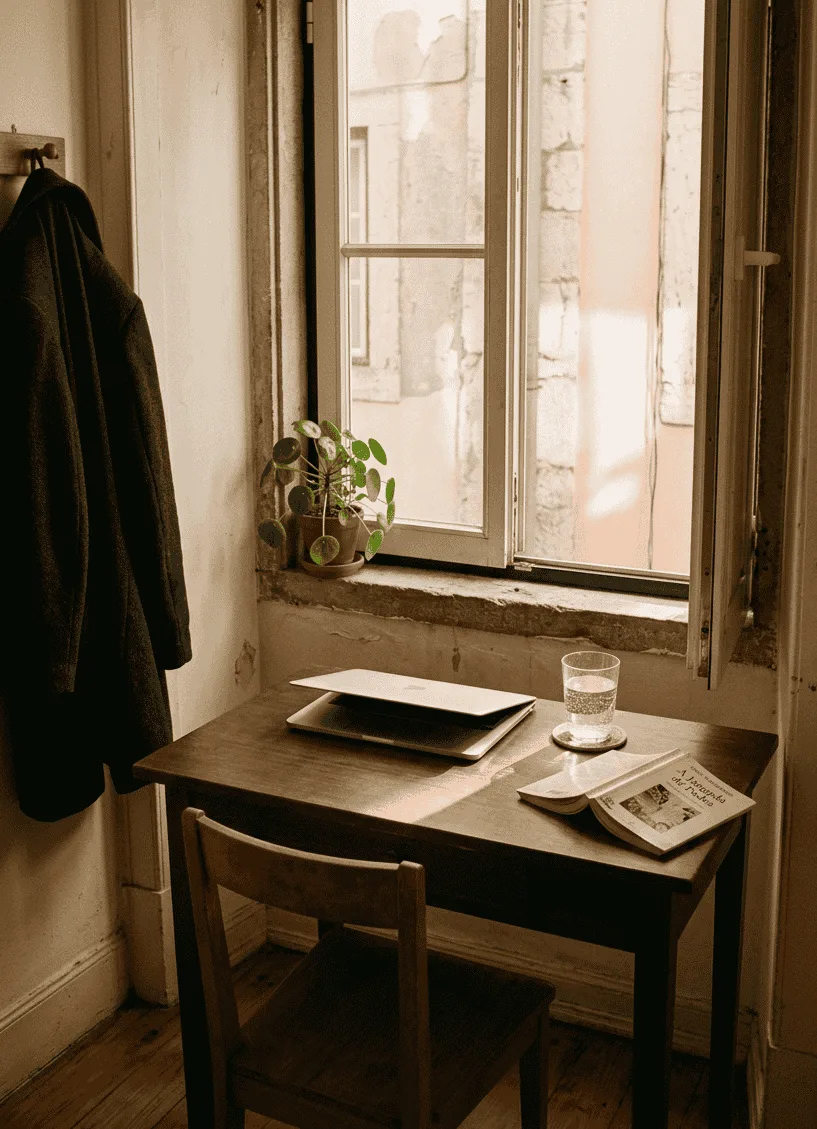
Surulere.
Surulere is a predominantly residential neighbourhood on the mainland, older than Yaba's creative-district identity and less polished than Ikoyi's institutional calm. It is a neighbourhood of family compounds, local markets, and the kind of long-established urban fabric that produces, in the upper floors of its buildings, rooms that have been used for serious domestic purposes for decades and have the quality that comes from that use.
Our Surulere choices are the most personal in this guide. Several of the people whose rooms we sat in are people one of us knows, or knows of. All of them, in his words, "understand what work actually is" — by which he means that they do not perform productivity at you, do not provide motivational objects, and do not require you to be appreciative of their room in a way that interrupts the work.
The Surulere rooms are the most modest we found in Lagos. They are not the least rewarding to work in — in several cases the conditions are better than what you'd find in Ikoyi, where the same calm tends to come at a far greater cost of living.
Victoria Island.
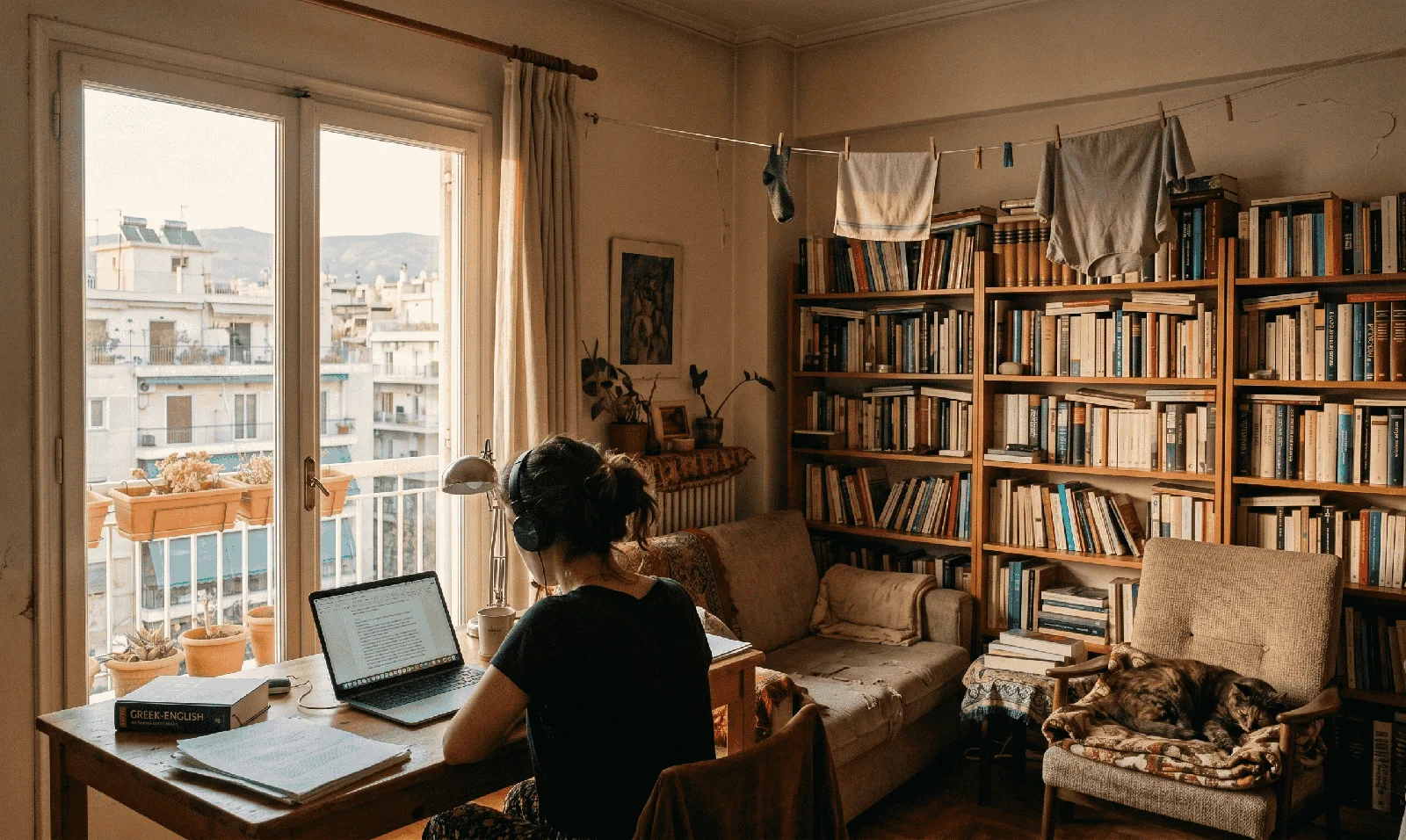
Victoria Island is Lagos at its most concentrated and, at peak hours, its most unnavigable. It is where the banks, the embassies, the large Nigerian companies and the international ones maintain their offices — which means that the private rooms available here exist alongside, and often above, one of the most commercially dense urban environments on the continent.
This sounds, and sometimes is, exhausting. But the Victoria Island rooms we know are chosen precisely for their remove from the street-level intensity: upper-floor apartments in the residential streets off Ahmadu Bello Way, behind or above the commercial strip, where the noise drops significantly and the quality of the available light in the mornings is, by any Lagos standard, exceptional.
The best Victoria Island room we worked in belonged to an architect who had fitted out the top floor of her building as a drawing studio and was happy, on days when she was working at a client's site, to let it to someone needing a day of uninterrupted concentration. The room had two parallel drawing tables, a view of the ocean — genuine ocean, Lagos Bight, not the lagoon — and a policy of no phone calls after noon, which she had instituted for herself and which she applied, as a courtesy, to guests.
We recommend Victoria Island for single long days rather than extended stays. The intensity of the surroundings is useful as a counterweight — the room's quiet registers more sharply because of what's outside it — but it compounds over multiple days in a way that Ikoyi and Surulere don't.
Lekki.
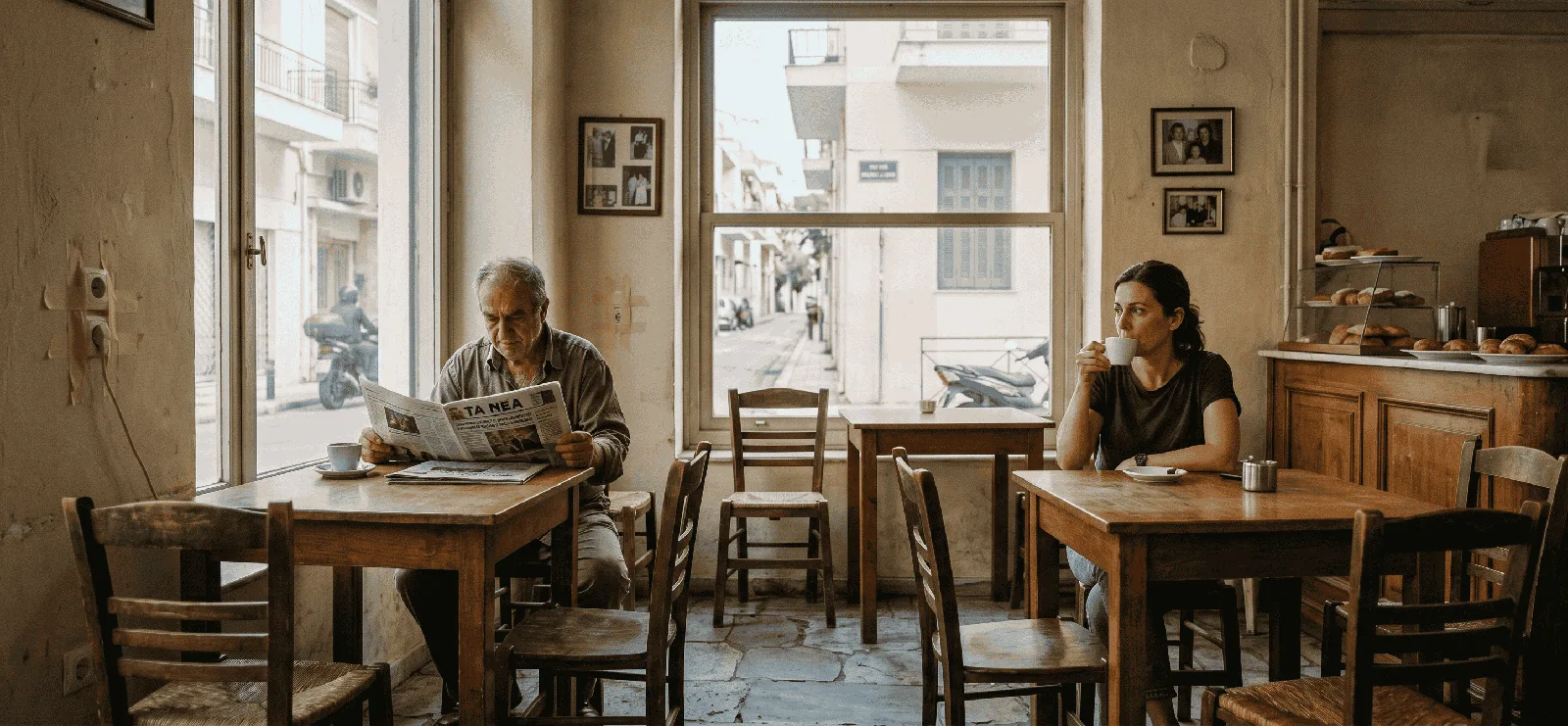
Lekki Phase 1 is where Lagos goes when it wants to remember that it contains, alongside everything else, a quantity of trees, a lagoon, and streets wide enough to walk along without being redirected into traffic. It is a residential neighbourhood with an unhurried pace — relative to Lagos; by other standards it is brisk — and a high concentration of the kinds of homes that have, in the past ten years, produced some of the most thoughtfully maintained private workspace we found in the city.
The Lekki rooms arrived to us through word of mouth more than through any other channel. Several of them are not formally listed anywhere and are available to people who are introduced to the host rather than to anyone who enquires. This is a Lagos pattern rather than a Lekki one, but it is most pronounced here: the rooms are in homes, and the homes are people's actual lives, and the approach to sharing them reflects that.
One of the Lekki rooms — in the upper floor of a bungalow compound two streets from the lagoon — had no desk as such: a dining table that had been cleared, a lamp brought in from another room, and a plastic chair that had been upgraded, at some point, with the addition of a cushion. The wifi was fast. The garden was visible from the window. A woman we are nearly certain was the host's mother brought lunch at one o'clock without being asked. It was, in the way that these things occasionally are, exactly what working in a borrowed room is supposed to feel like.
"Every other city in this guide offers you a working day against a backdrop of city. Lagos offers you a working day inside one. The distinction sounds small. It is not small at all." — From the field notes, March 2026
Practical things, briefly.
Getting around
Okada (motorcycle taxi) for short distances, BRT bus for longer mainland routes, private car (hired for the day) for cross-island travel. The Lagos BRT is functional, air-conditioned, and runs on dedicated lanes that bypass a significant portion of the traffic. It does not, however, reach all five neighbourhoods in this guide — check the route map before relying on it.
Power
NEPA (grid power) is unreliable across Lagos. Every room in this guide had a generator — the question is which ones switch automatically and which ones require manual intervention when the grid drops. Worth asking. Nearly all rooms listed have uninterrupted power; the one or two exceptions are noted where relevant. Bring a UK-style three-pin adapter (Nigeria uses Type G).
Wifi
Fibre is available in Ikoyi, Victoria Island and the newer Lekki developments. Yaba and Surulere rely more on mobile broadband (Airtel and MTN both perform well). Every room in this guide we tested through a full working day. If a specific room has a bandwidth caveat, it is noted in its listing.
Timing the day
Lagos morning light is best before 9am. After that the heat builds quickly. Many rooms have ceiling fans and air conditioning, but the working conditions at 2pm are meaningfully different from those at 8am. Plan accordingly — the most demanding work earlier, the more mechanical tasks in the afternoon.
Money
POS card payment is widespread in Lagos — more so than in any other city in this guide — but cash is still essential for markets, okadas, and smaller food vendors. Sterling, euros and dollars can be changed at Bureau de Change offices in most commercial areas; rates vary. ATMs in Ikoyi and Victoria Island are generally reliable.
When to come
November through February is the dry season — cooler, less humid, the most comfortable for sustained work. March to May sees the heat building. June to September is rainy season: intense, sometimes spectacular, and disruptive to transport in ways that require buffer time built into every appointment. October is the transition and is, in our experience, the best single month.
Eight cities. Eight field guides.
Lisbon, Mexico City, Athens, Glasgow, Naples, Bangkok, Istanbul, Lagos — each a working map of the neighbourhoods and rooms worth knowing.
All field guides →