Naples.
The world's loudest place to concentrate.
Naples is an instruction in the non-necessity of silence. Every room we worked in here was noisy by the standards of the other cities in this guide. Every one of them worked anyway.
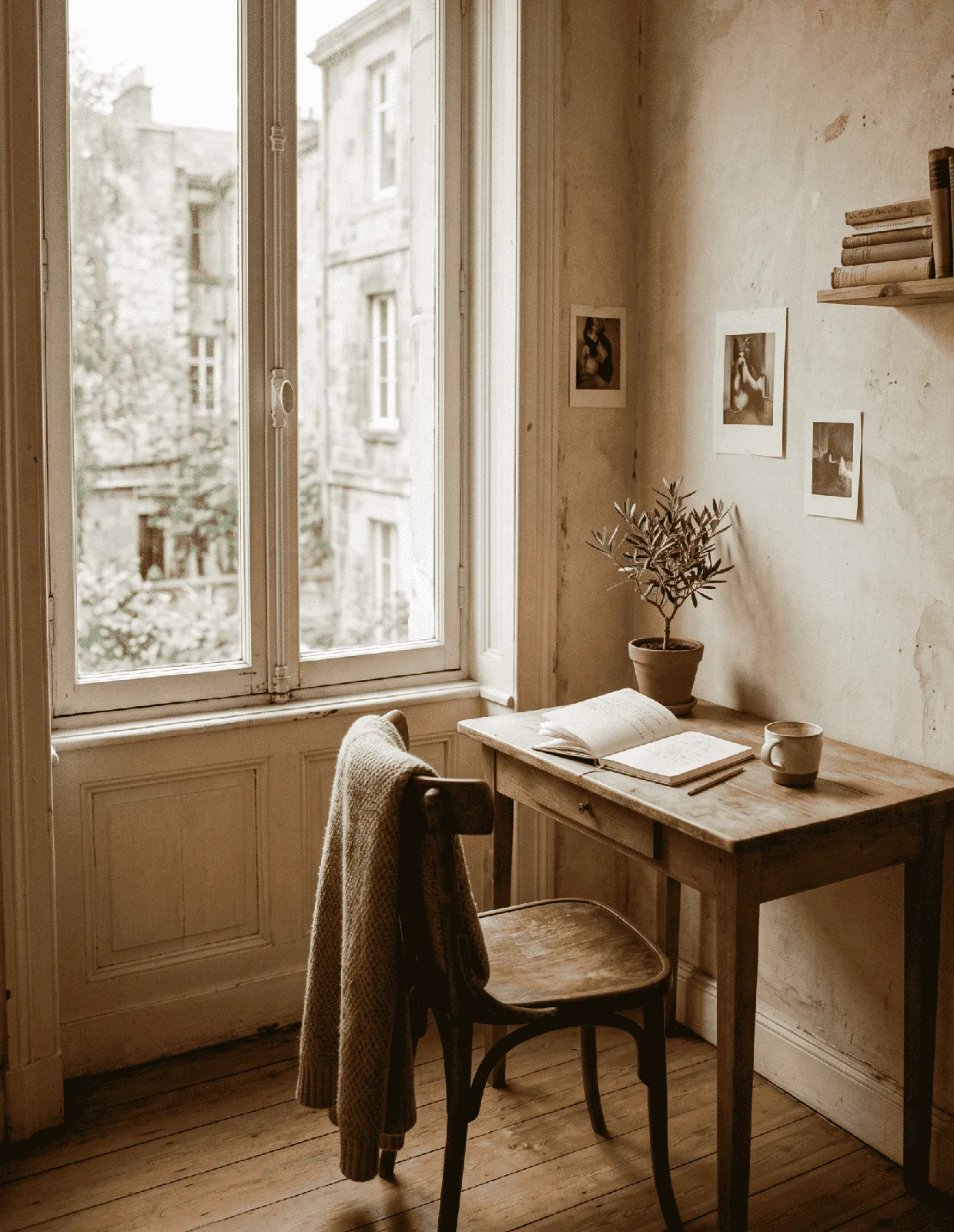
We debated whether to include Naples. Not because the city isn't interesting — it is probably the most interesting city in this guide — but because the conditions it offers the working person are, by conventional measures, terrible. The streets are loud. The wifi in most buildings is unreliable. The hours at which quiet might be expected are not the hours at which Neapolitans choose to be quiet.
We included it because every person we spoke to who had worked here said the same thing: they had never produced so much. There is something in the city's complete indifference to your working agenda that turns out, paradoxically, to be liberating.
A barber in the Sanità quarter keeps one spare chair empty between haircuts. A friend of ours sat in it, quietly, for whole afternoons; they would shake hands at the end of the day. It is the room from Naples we talk about the most, and we have never been able to fully explain why.
Sanità.
The Sanità is the neighbourhood immediately north of the historic centre, separated from it by a series of bridges over a valley that the city, over several centuries, simply built across. It is one of the most densely inhabited neighbourhoods in one of the most densely inhabited cities in Europe. It is very loud.
The barbershop is on a street that, at 9am on a Monday, has two competing sound systems, a fruit vendor, a scooter repair workshop, and at least one person having an argument at a volume that suggests the other party is in a different building. The chair inside the shop is perfectly quiet by comparison. This is relative, but relativity is the operating condition of the Sanità.
The rooms we've worked in around the Sanità range from that barber's chair to a fourth-floor apartment above a convent, with a view of the bay and — improbably — exceptional acoustics, on account of the thick old monastery walls.