Glasgow.
Work harder here. The light insists.
A city with a complicated relationship to gentleness. The rooms here are not delicate — they are practical, warm, and unnervingly productive.
Glasgow is not a city that performs for visitors. It has, in the last twenty years, acquired galleries and restaurants and a waterfront that the city council is quietly pleased with, but it has not softened. The light is northern and serious. The stone is grey and serious. The people, once they have decided you are worth speaking to, are extraordinarily warm.
This is, we have found, an excellent environment for work. There are no distractions of the Mediterranean variety. The coffee is strong and served without theatre. The rooms we worked in here were, almost uniformly, functional — an 8×11 converted pantry in Govanhill, a writer's back room in Shawlands, a Victorian terraced parlour in the West End whose owner uses it as a consulting room three days a week and leaves it quiet the rest.
We cover five neighbourhoods: Govanhill, Shawlands, the West End, Finnieston, and the Merchant City. We do not cover the city centre, because the city centre of Glasgow, like most city centres, is not a place for working.
Govanhill.
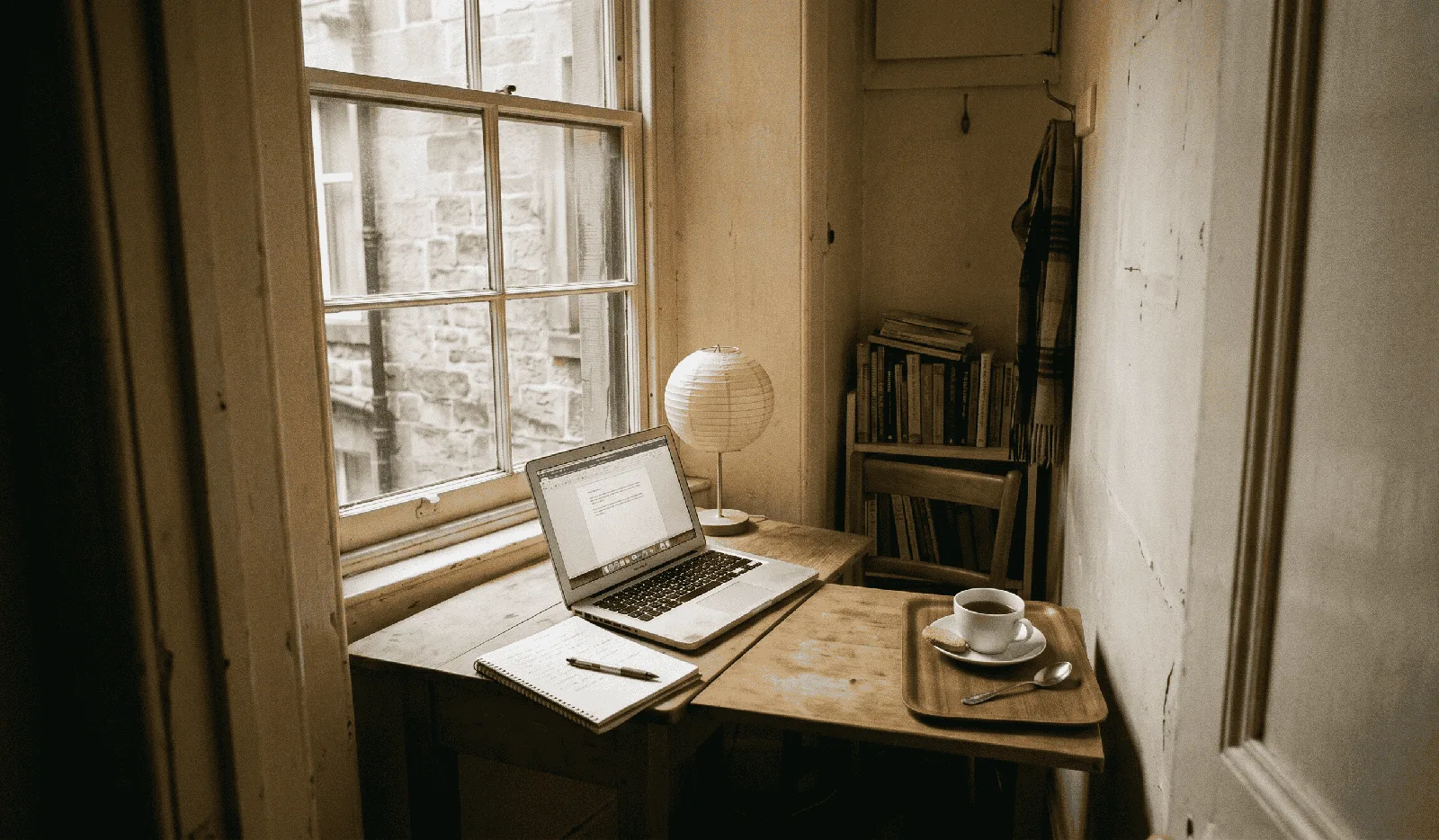
In Govanhill there is a converted scullery we keep coming back to. It belongs to a retired secondary school teacher — eight feet by eleven feet, a former pantry, one high window, a 1970s paper lampshade. She has let people work in it quietly for a couple of years now, never advertised, mostly passed on by word of mouth from one friend to the next.
The scullery is, by any objective measure, a small room with a wooden desk, one chair, and a window that faces another building across a narrow airshaft. The light is northern and British, which is to say: grey, diffuse, and completely without drama. At eleven in the morning, tea appears on a tray outside the door without a knock. The tray has a small biscuit. This has never varied.
Everyone we know who has worked in the scullery describes it in terms closer to a retreat than to a desk. One friend called it "the only room I have ever worked in that asked nothing of me except that I sit down." When we repeated the line back, its owner said it was "a bit much" — but she didn't disagree.
West End.
The West End is where Glasgow keeps its universities, its most earnest independent bookshops, and a population of academics, architects, and documentary filmmakers who seem to spend most of their time in the coffee shops near Byres Road looking productive. The rooms we worked in here are behind those coffee shops — in the top-floor flats and garden studios that line the quieter streets behind the main drag.
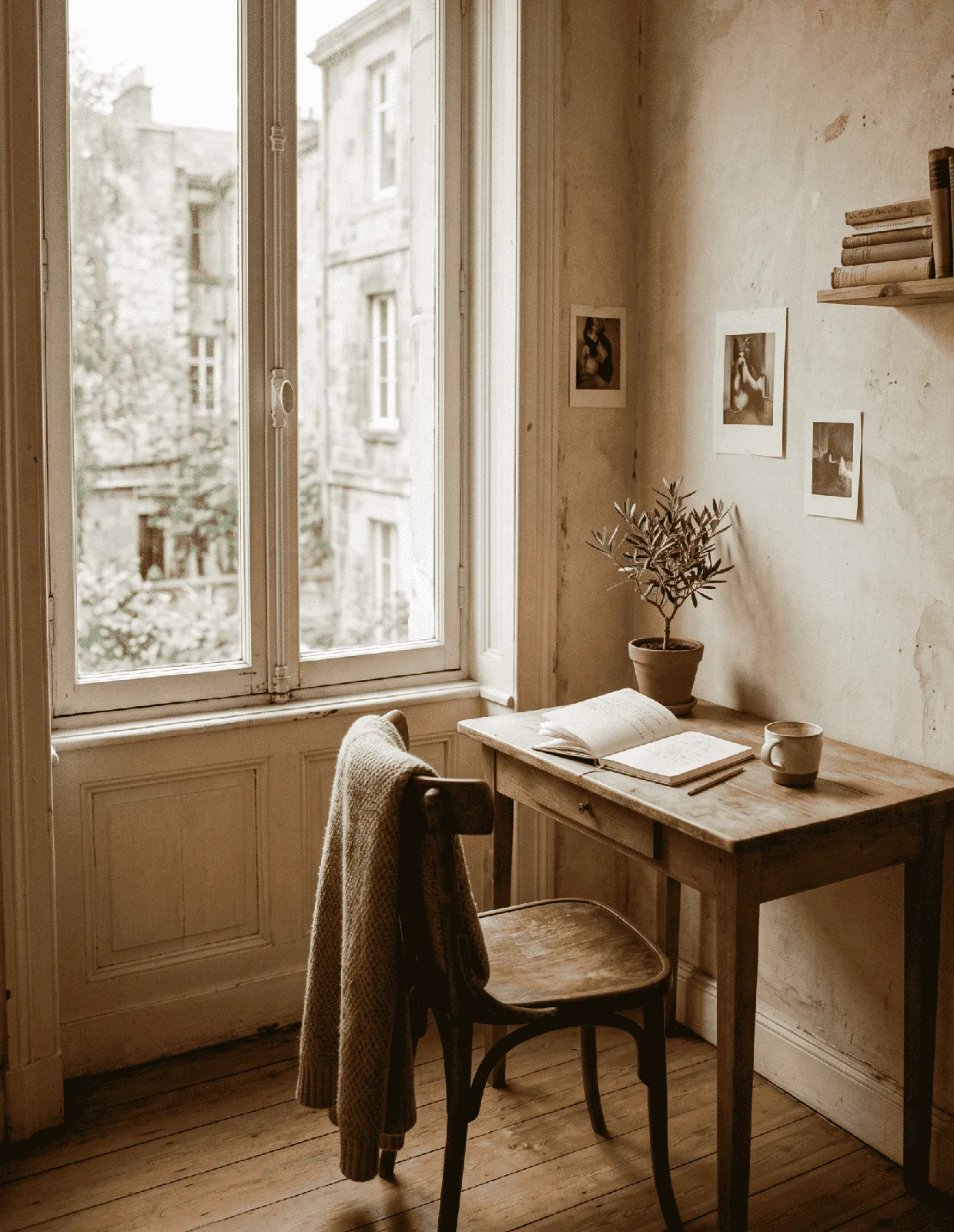
The Victorian housing stock is the main asset. Three-metre ceilings. Bay windows. Fireplaces that are mostly decorative but occasionally still functional. The natural light is better here than in most Glasgow neighbourhoods because the streets are wide and the buildings are not tall enough to block the south-facing windows. In winter, which is to say for a significant portion of the year, this matters.