Athens.
Work where the marble still shows.
A city that was ancient before most cities were anything. It has good light, terrible wifi in cafés, and some of the most interesting private rooms we have worked in anywhere.
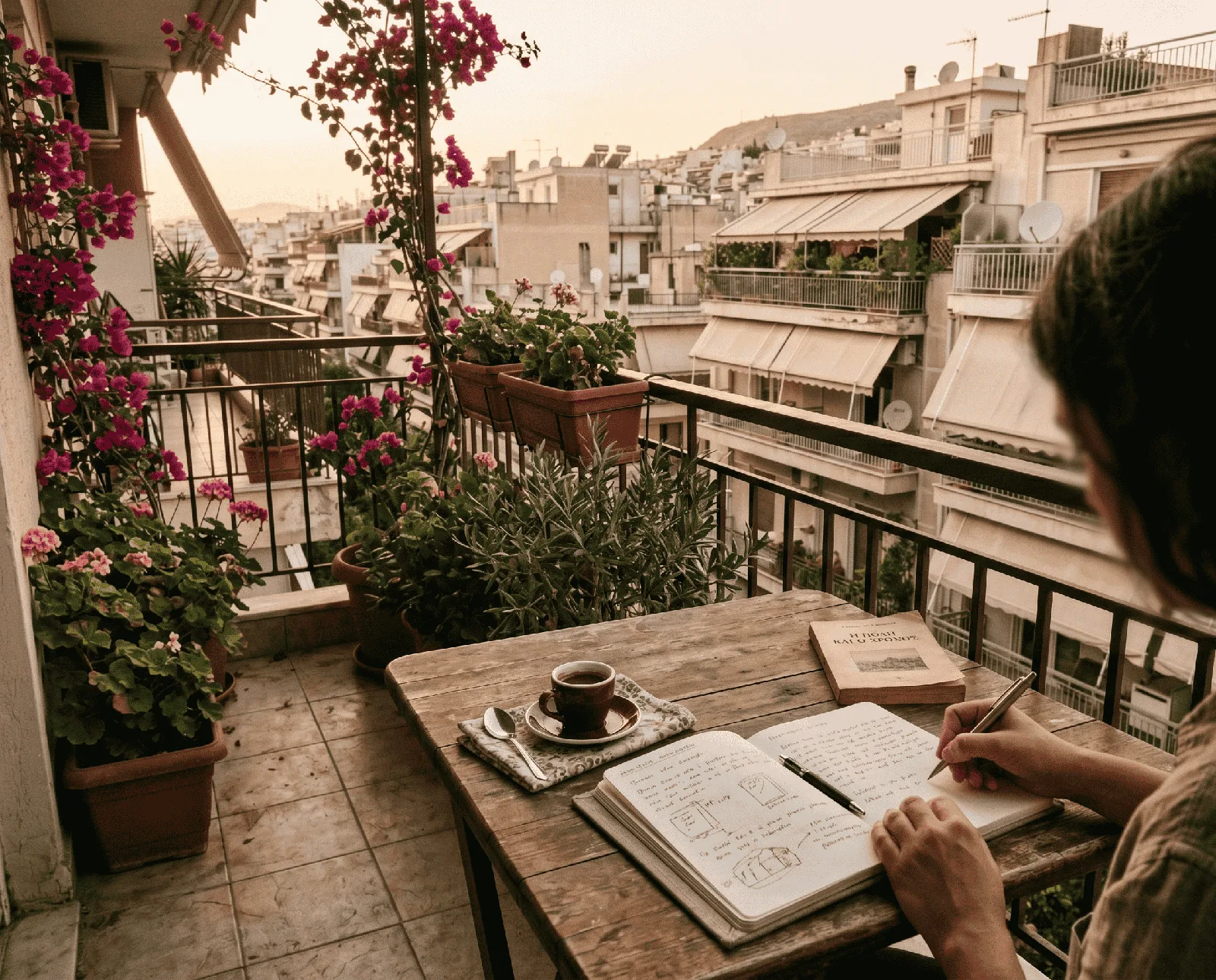
Athens is a working city disguised as a tourist one. Most visitors see the Acropolis and the seafront restaurants. The city's actual life — the part where people sit at desks and translate things and argue about architecture and run small design practices out of converted flats — happens in the residential neighbourhoods that tourists don't bother with.
That is where we spent our time. Koukaki, directly below the Acropolis. Pangrati, where a café on Plateia Varnava famously banned laptops. Exarchia, which is noisier and cheaper and has better bookshops. Monastiraki, which is crowded and has one extraordinary room above a fabric shop. Kolonaki, which is expensive. Psyrri, which has the best evenings of any neighbourhood we spent one in.
The wifi situation in cafés is worse than it should be for a European capital. This is, in some ways, a feature. The private rooms we worked in had reliable connections. The city, increasingly, does not want you working in its public spaces. Take the hint.
Koukaki.
The neighbourhood we kept coming back to, and the one we'd most readily send a friend. Koukaki sits between the Acropolis and Filopappou Hill, which means it is sheltered from the north wind in winter and shaded by good buildings in summer. It is not glamorous. It is very liveable.
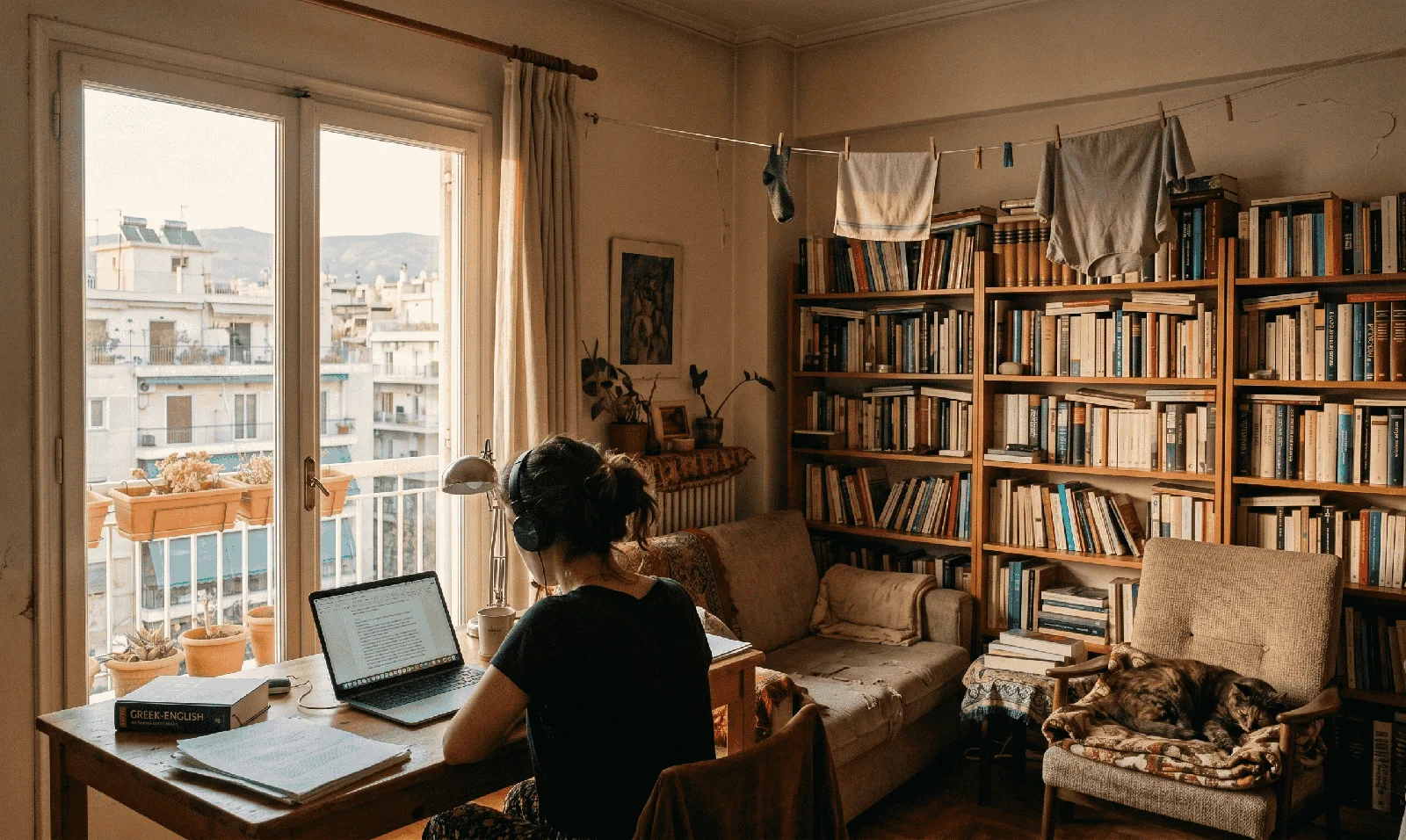
The best rooms here are in the upper floors of the prewar apartment blocks that make up most of the neighbourhood's housing stock. These buildings have high ceilings, deep window recesses, and the kind of thick stone walls that make August in Athens survivable. The one we remember best is someone's actual living room — the clotheslines, the bookshelves, a fifteen-year-old cat who chooses her own spot and is not open to negotiation.
A few other Koukaki rooms have stayed with us: a retired professor's study with a view of Filopappou, a textile designer's atelier on the third floor of a 1930s building, and a shared reading room above a secondhand record shop we keep meaning to go back to.
Pangrati.
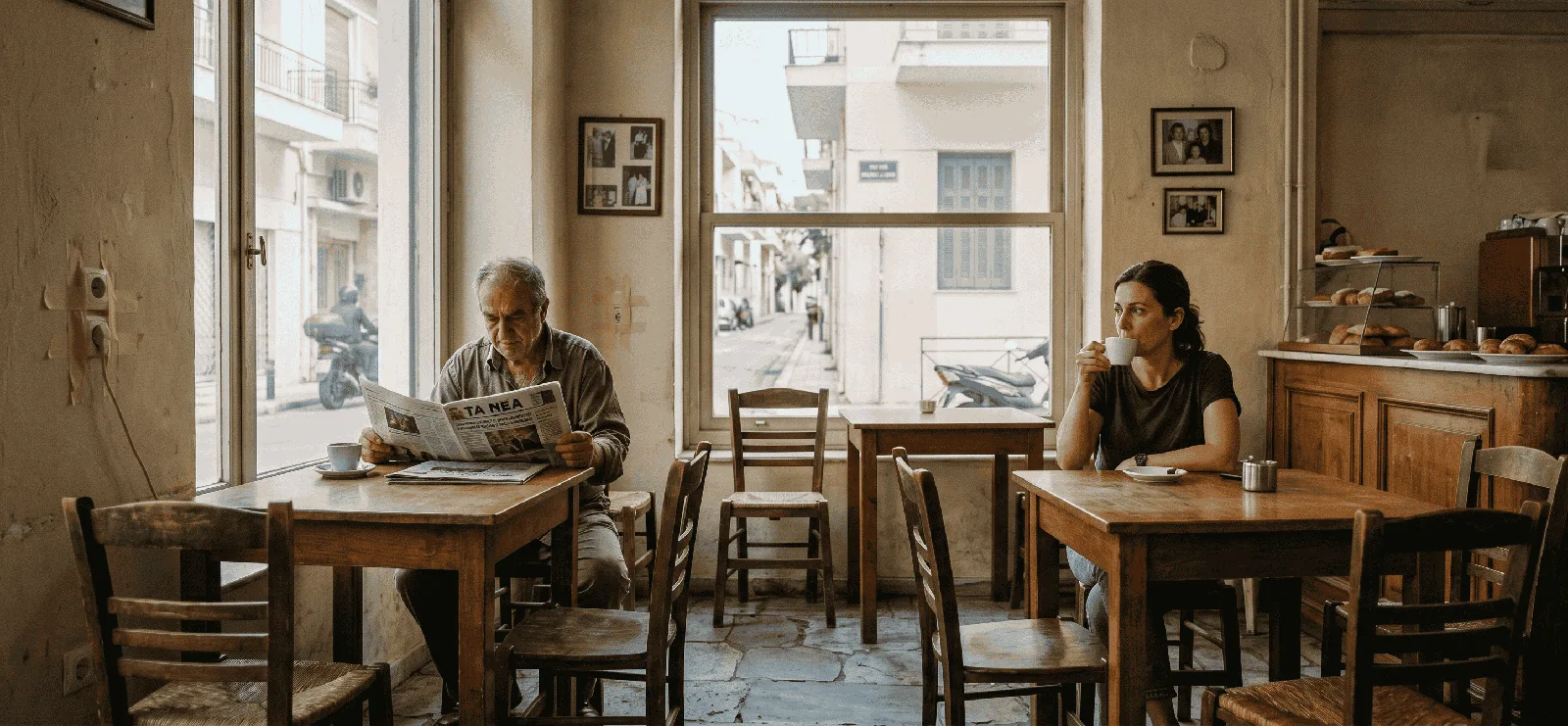
Pangrati is where Athenians who have given up on Kolonaki but not quite accepted Exarchia end up. It has a pleasant square, a famous café that no longer serves laptop workers, and a surprisingly high number of quiet rooms to work in for its size.
The café situation is instructive. The decision to ban laptops on Plateia Varnava has, in a way that probably surprised its owner, pushed the work outward. The half-dozen people who used to sit in the café now work from the apartments and studios around it. There is a feedback loop here that we find satisfying.
The rooms in Pangrati tend toward the domestic: spare rooms in family apartments, the occasional rooftop studio, once a garden shed that had been converted with some ambition and varying success into a writing room. Several are within two minutes' walk of Plateia Varnava, which means you can see the café from the window and work knowing you would not be welcome in it.
Exarchia.
Exarchia has a reputation that precedes it. It is, depending on who you ask, Athens's most interesting neighbourhood or its most chaotic or its most politically charged. All three are partially true. It is also the neighbourhood with the best bookshops in the city, the strongest coffee, and — we have found — some of the most opinionated people.
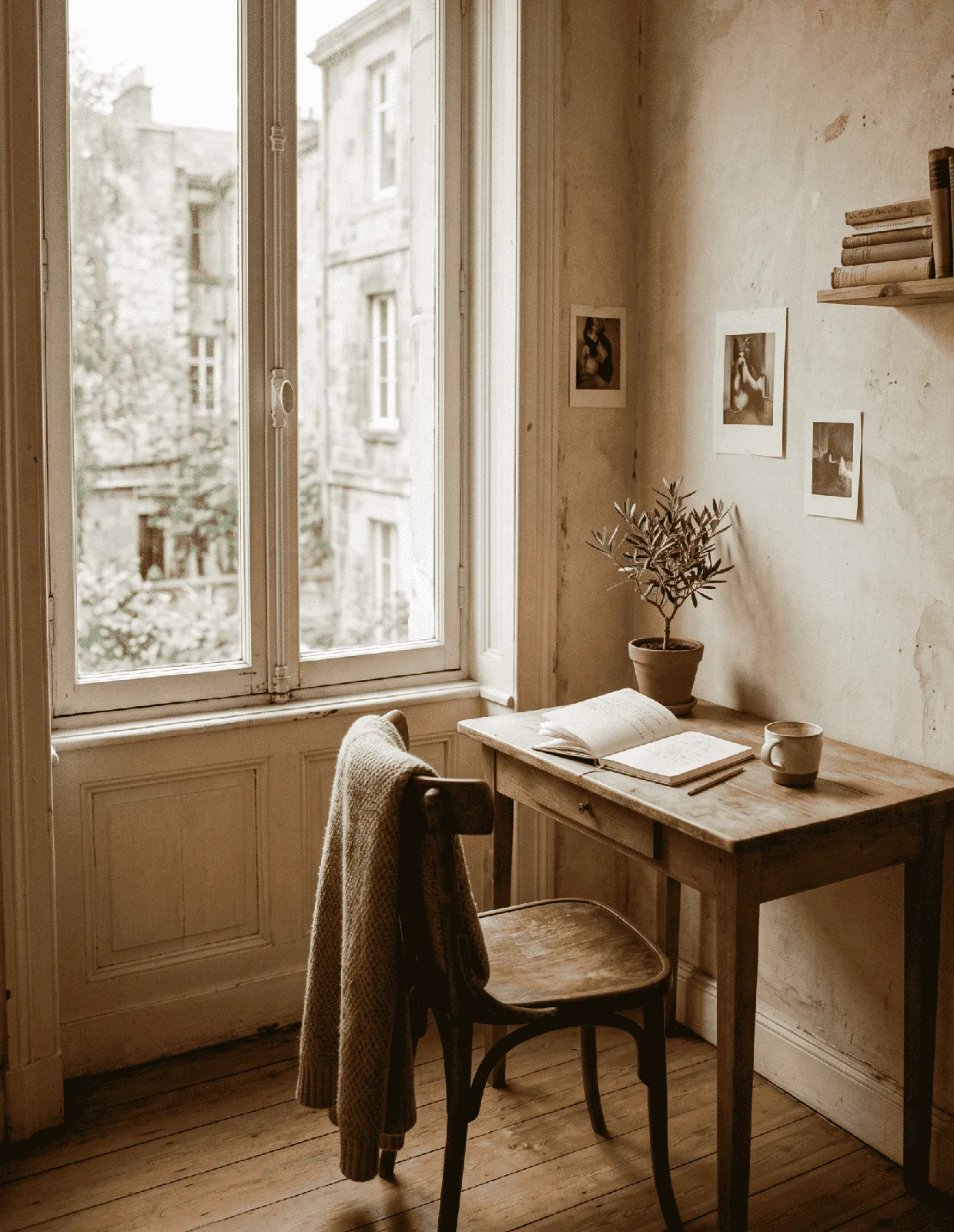
The Exarchia rooms tend to belong to younger people, more likely to leave handwritten notes alongside the wifi password. The notes are usually worth reading. In one, a postdoctoral researcher in comparative literature leaves a book recommendation; in another, a graphic designer leaves a small printed broadside of a poem she thinks fits the current season. Those details are why we remember them.