Every city we’ve spent time in seems to have a place that defeats work. Not a bad room — something more specific than that. A place with all the apparent conditions for concentration that nevertheless produces, in everyone who tries to work there, exactly nothing.
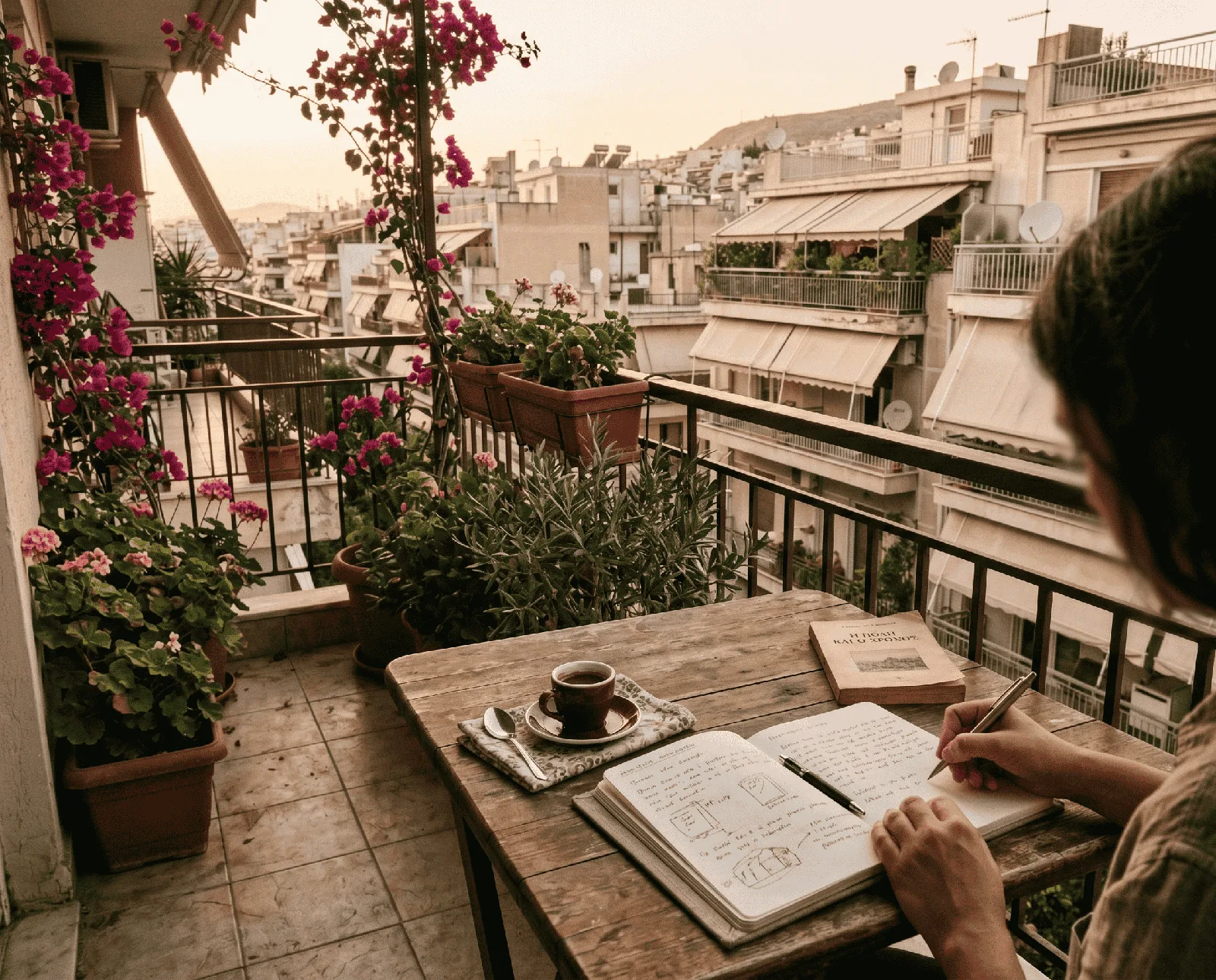
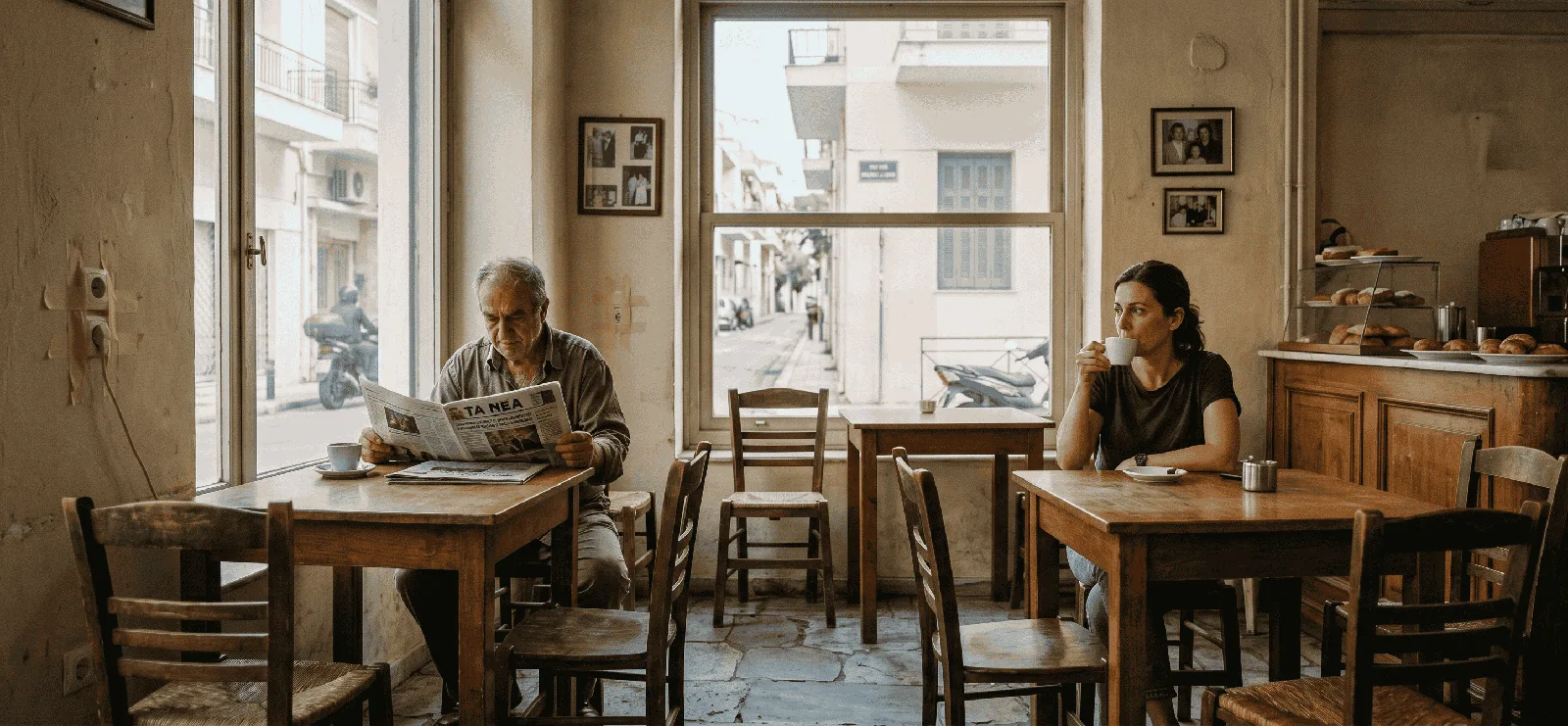
In Athens, it is a café on Plateia Varnava. It is now a little famous, because the owner banned the laptops — which makes it the wrong kind of example — but before the ban, when it still had wifi and sockets, it had a specific quality of unproductiveness. Too much happening on the street. Too good a view of it. The light wrong in a way nobody could quite articulate. The coffee too distracting to ignore and too good to stop drinking. Nobody did their best work there before the ban. Nobody does any work there now. Both seem like correct outcomes.
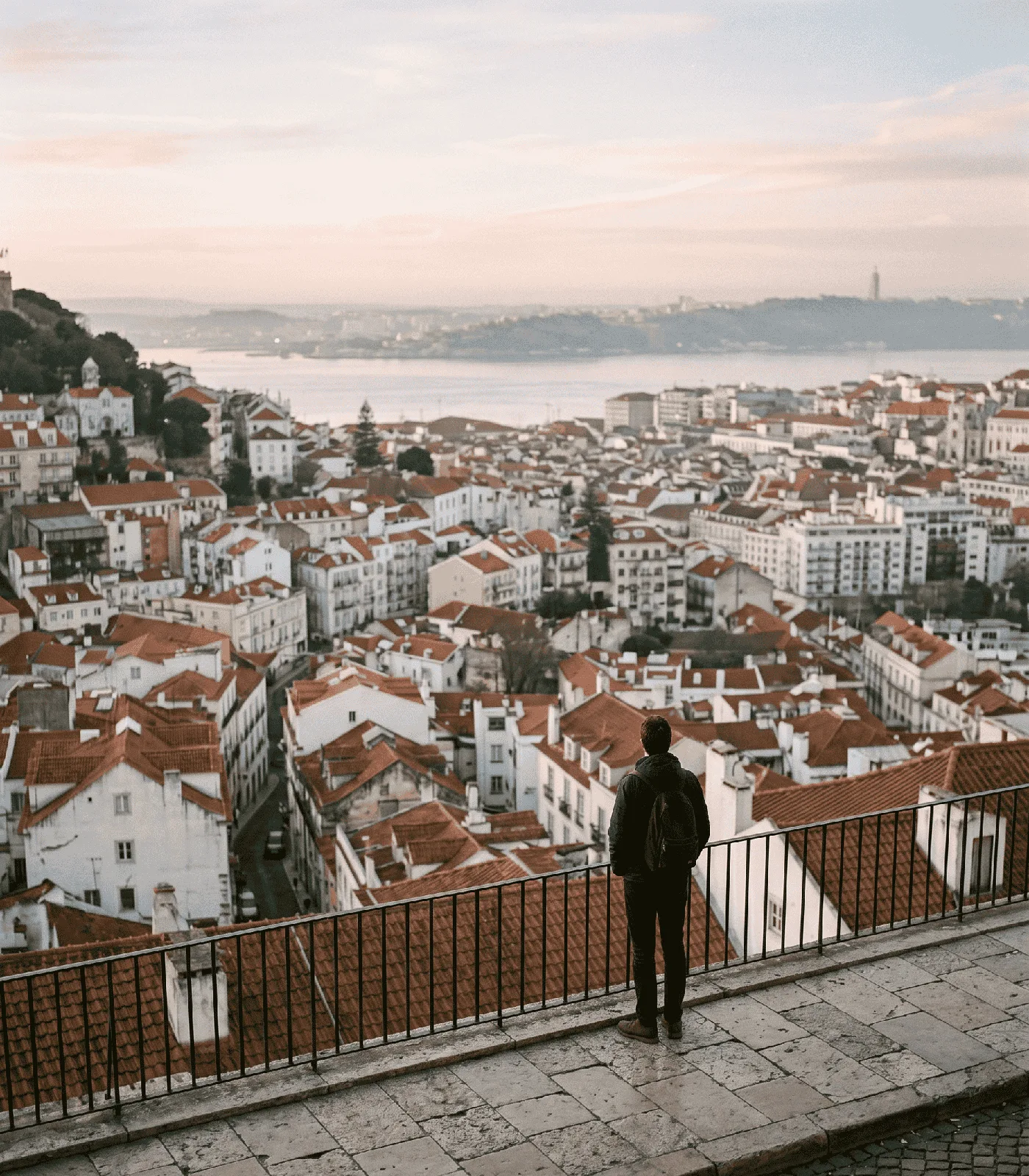
In Lisbon, it is the miradouros — the viewpoints, the open terraces where the tram lines end and tourists gather and the Tagus sits below like something that has been there longer than the city and will be there after. Beautiful. Completely impossible to work at. The view is the whole content of the place, and there is nothing left over for thinking.
The paradox of the beautiful view
This seems consistent across cities. The most beautiful view in any given room is the one that makes work hardest. A Bosphorus view in Karaköy, a Lycabettus view from a study in Kolonaki, a lagoon seen from high above Victoria Island — all of them require active resistance, a deliberate choice to look away and do the work. That resistance is, in small doses, energising. It becomes, in larger doses, exhausting. The rooms that produce the most sustained work are almost always the ones facing another wall.
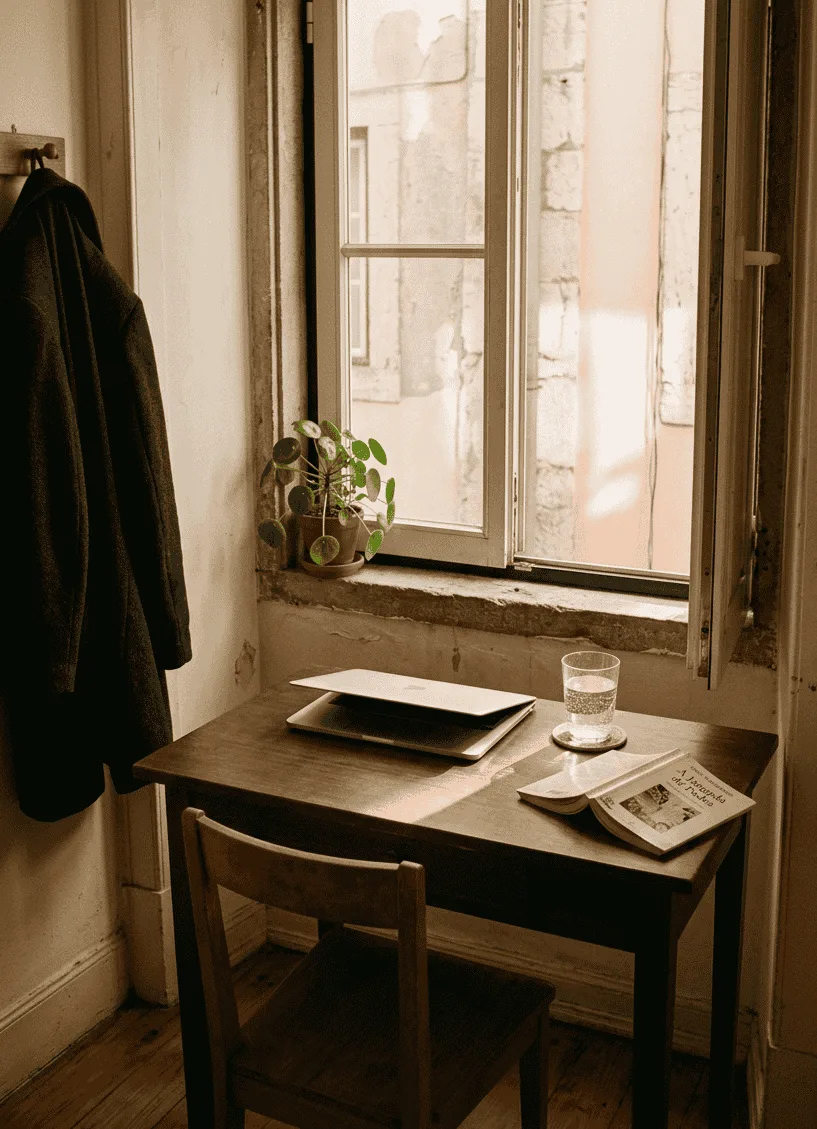
The most productive desk we know faces a narrow Govanhill airshaft. The least productive view is probably the Bosphorus at Karaköy. This is not a coincidence.
Naples specifically
In Naples, the place that defeats work is the waterfront. The Lungomare Caracciolo on a clear day is one of the most beautiful urban promenades in Europe: the bay, Vesuvius, the light on the water, the whole theatrical apparatus of the city presenting itself at full intensity. Nobody works on the Lungomare. This is understood. There are no cafés there that even attempt wifi. The city knows what it is offering and has appropriately declined to complicate it with productivity.
The rooms where work actually happens are all inland, facing courtyards, or deliberately positioned to see as little of the spectacle as possible. A barbershop in the Sanità faces the street, but it is a loud, domestic, demanding street — a working condition rather than a distraction. A ceramicist’s bench in Spaccanapoli faces north. A spare room in Chiaia faces an interior courtyard. The city reserves its beauty for the walks between work, which is, we think, the correct allocation.
Why the unworkable places matter
The places that defeat work exist to remind you what work is. You go to the Lungomare and you cannot think, and you go back to the bench inland and you think clearly. The contrast is the mechanism. The beautiful, unworkable places are not failures. They are the reason the workable ones feel, when you arrive at them, like exactly what you needed.