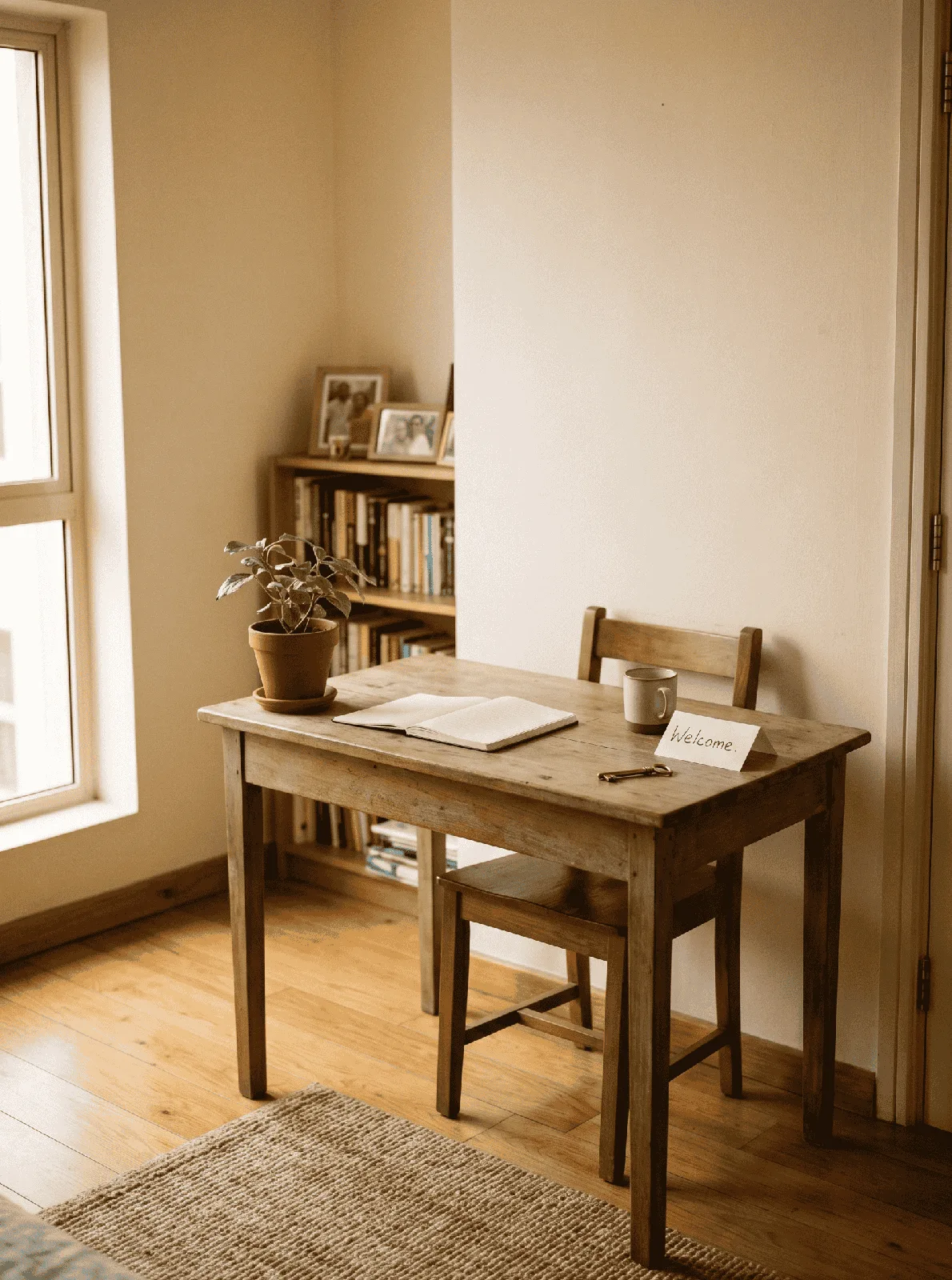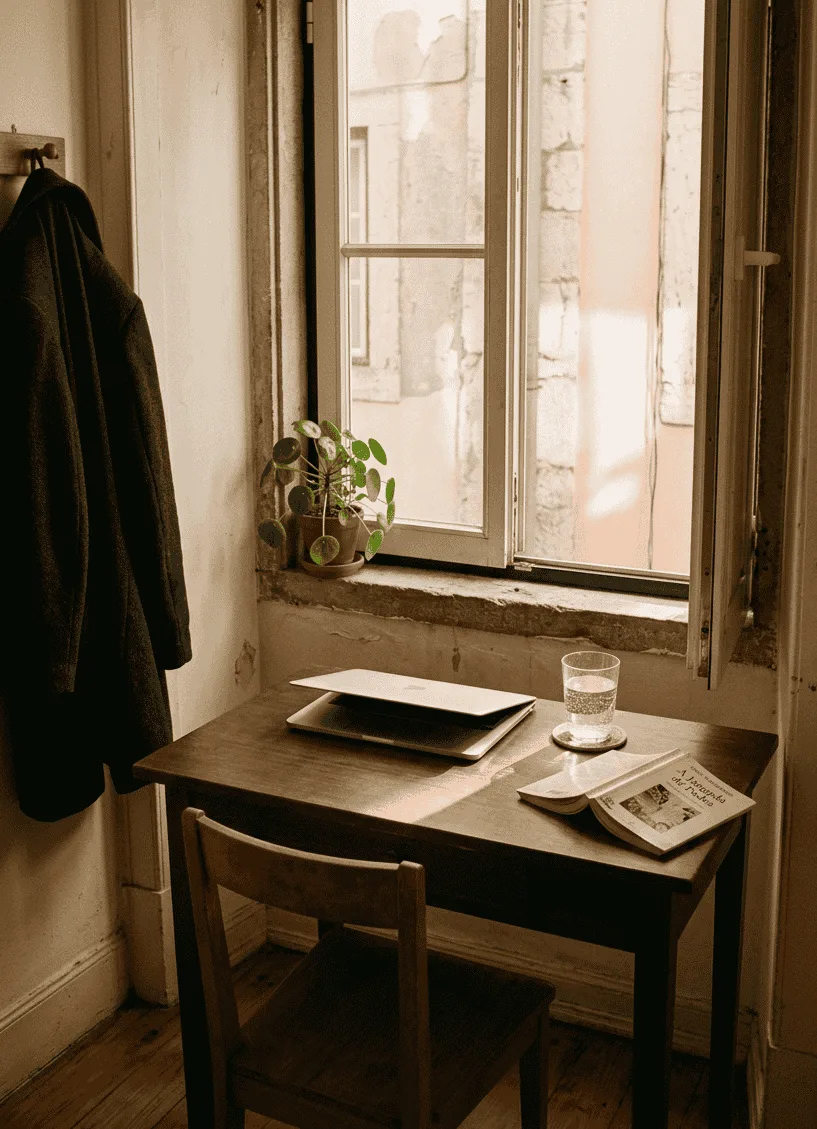
Between a few of us, we have now worked in enough borrowed rooms to have accumulated a dataset of a particular and unscientific kind. It is not made of numbers but of observations — the kind you make when you sit down in someone else’s room, briefly, to see whether you can actually get anything done in it.
One observation recurs so consistently that we have begun to treat it as a principle: the rooms with the expensive chair are rarely the ones we go back to. The rooms we return to — the ones we still think about, the ones we end up writing to each other about afterwards — are almost invariably the ones with a hard chair.
Not always literally hard. But modest. Functional. A chair that communicates, clearly and without apology, that it is here to support work, not to support the person’s idea of themselves while working.
The ergonomic trap
A very comfortable chair does something specific to the body: it removes all friction. And friction — mild, ambient, the kind that lives in a slightly too-upright posture, in a seat that doesn’t encourage you to tilt back and stare at the ceiling — is, we have come to believe, one of the underrated conditions of concentration.
The expensive ergonomic chair invites you to settle. To adjust. To find the perfect configuration. The hard chair invites you to work, because it offers so few alternatives.
The rooms we return to are never the ones where we were most comfortable. They are the ones where we got the most done.
A brief taxonomy
We have now sat in enough rooms to offer, with some confidence, a taxonomy of chairs and their effects. The kitchen chair — wooden, four-legged, no padding, often borrowed from a dining table — is, in our experience, the most reliably productive. The vintage office chair with the cracked leather and the slightly unpredictable tilt is very good, once you have stopped adjusting it. The mid-century wooden desk chair, like the one in a converted scullery we once worked in for a week in Glasgow, is the platonic ideal: visually severe, physically adequate, entirely focused on the business at hand.
The standing-desk stool is variable. The beanbag is out of the question. The Eames lounge chair is a beautiful object and a genuinely terrible place to try to finish anything.
What the chair signals
Beyond its physical properties, the chair sends a signal. A hard chair in a bare room says: this room is not trying to seduce you, it is simply giving you somewhere to work. The signal matters because it sets the register for the whole room, and the register sets the register for the whole day.
We say this not to advocate for discomfort — some of the best rooms we have worked in had, alongside the hard chair, a very good desk and excellent light and, in one case, a pot of tea that arrived without being asked for. We say it because, looking back over the rooms we remember most fondly, the word that keeps coming up is “productive,” and it keeps coming up about the plainest rooms.
“Comfortable” belongs to the rooms we left early.