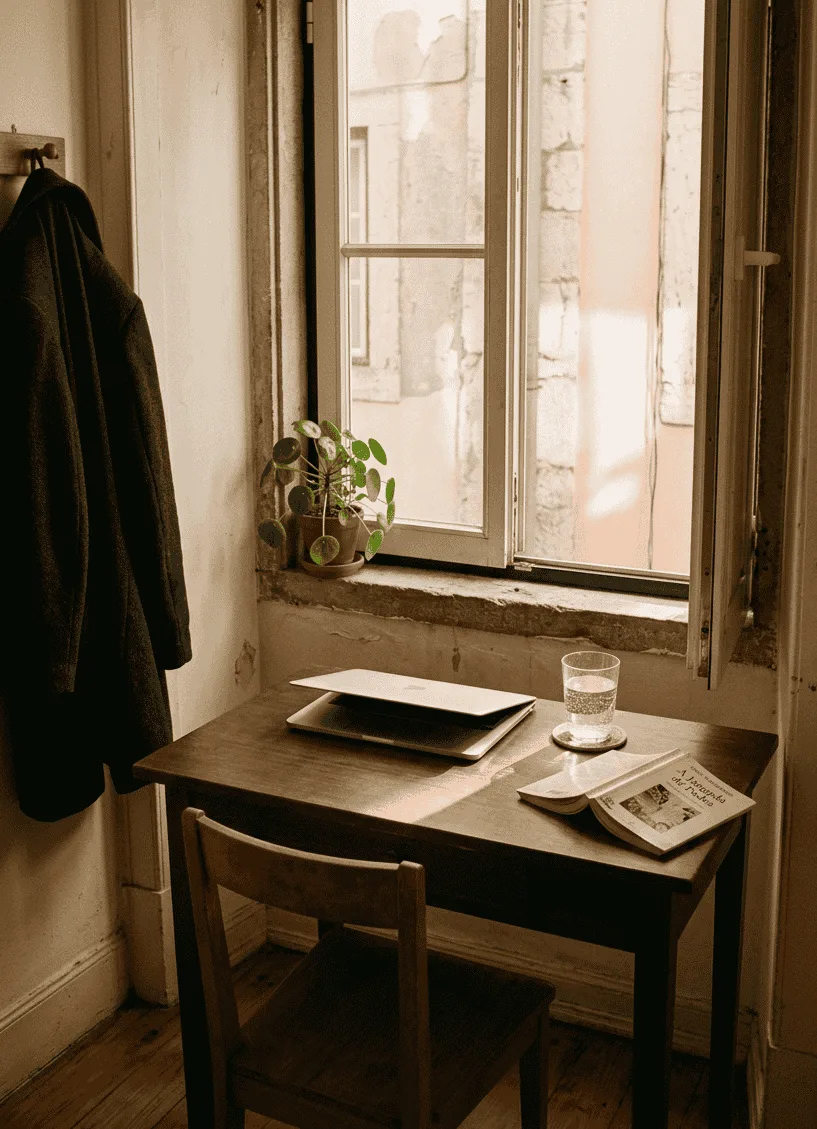
There is a mark on a desk in a barbershop in Naples — a shallow, dark indentation in the wood, slightly to the left of centre, where a glass has been set down daily, perhaps for years. The barber doesn’t know how long it has been there. He took the shop on from an uncle, who had it from a man whose name nobody remembers. The mark is older than anyone currently using the room.
One of us worked at that desk for three afternoons last autumn — a spare chair pulled up to the counter, while beards were trimmed a few feet away and the radio played something too quiet to identify. The mark was, for reasons hard to fully explain, a source of genuine comfort. It meant the desk had been useful before. It meant the room had a life that preceded ours, and would have one after.
Against the pristine
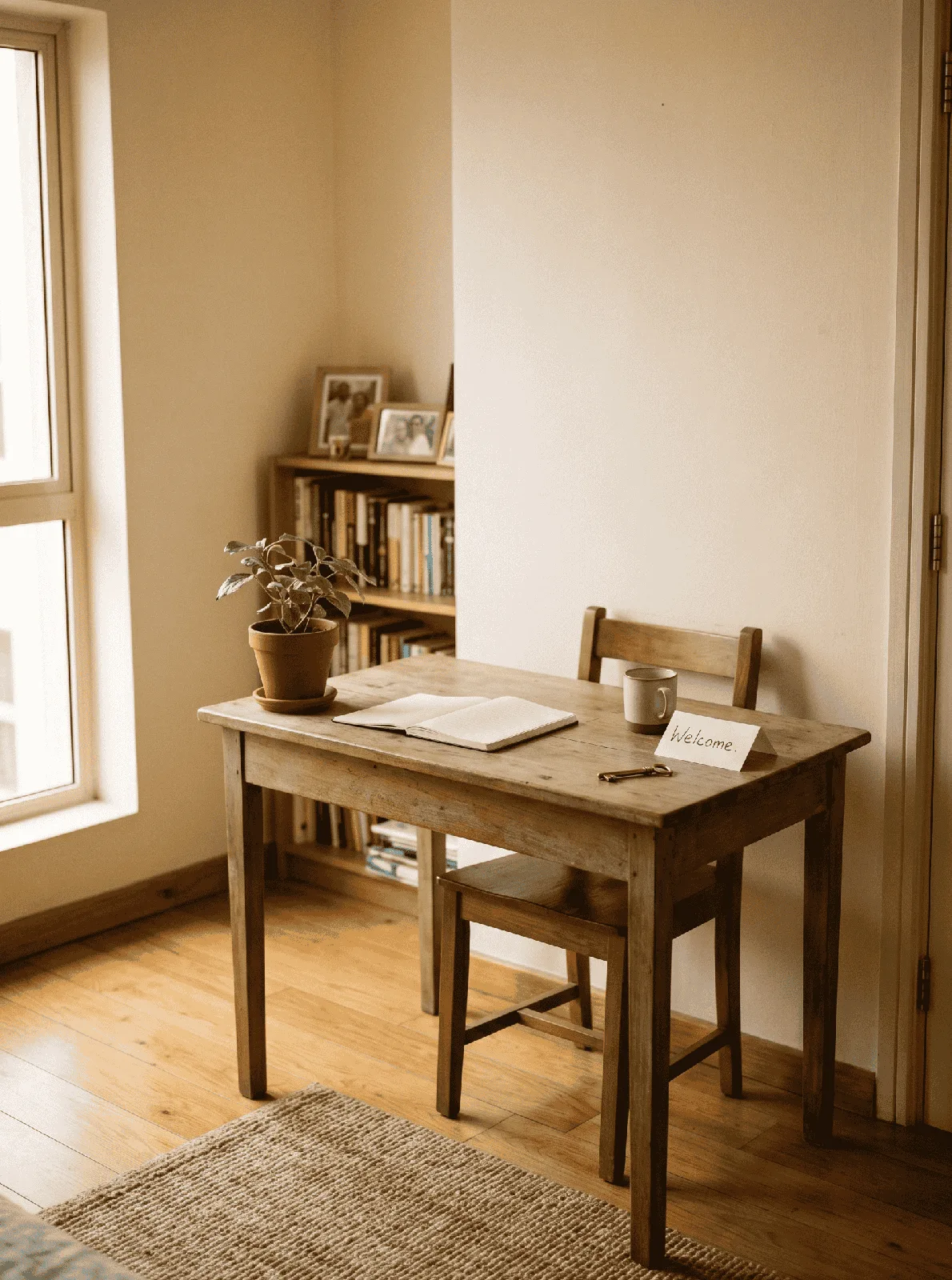
There is a particular aesthetic currently dominant in the world of workspace design — you know it immediately when you see it. White walls. Untouched wood. Cable management so thorough that the desk’s surface is almost featureless. Plants positioned to suggest life without introducing disorder. The room says: this is where work happens. But it says so in the voice of a place where work has never actually happened yet.
We find these rooms hard to work in. Or rather: you can work in them, but it costs you something. There is an ambient pressure, in a pristine room, not to disturb it. Not to leave the evidence of your own occupation. Not to break the visual promise of the photographs that, very likely, were taken before anyone had moved in at all.
The room that has already been used is a room that has already been forgiven. Its surfaces carry the record of previous occupation, and that record is a form of permission.
On patina as argument
In 1902, the Viennese architect Adolf Loos wrote that “the value of things increases with age.” He was arguing against ornament, but the argument applies equally, we think, to use. The desk that is scarred from use is not diminished by its scars. It is enriched by them. Each mark is evidence that someone sat here and worked and the desk survived.
A converted scullery in Glasgow, where one of us spent a winter week, had a desk that has clearly been a desk for many decades, through at least three different uses of the room. The surface is not perfectly flat. The paint on the wall behind it is slightly yellowed by an old lamp. The high window has, in one corner, a small crack sealed with what looks like candle wax. By any property-photography standard the room is imperfect. By any working-person standard it is completely correct.
Whoever it was worked there for a full day, with tea arriving at eleven, and came away with more pages than they manage in most weeks at home.
The rooms that stay with you
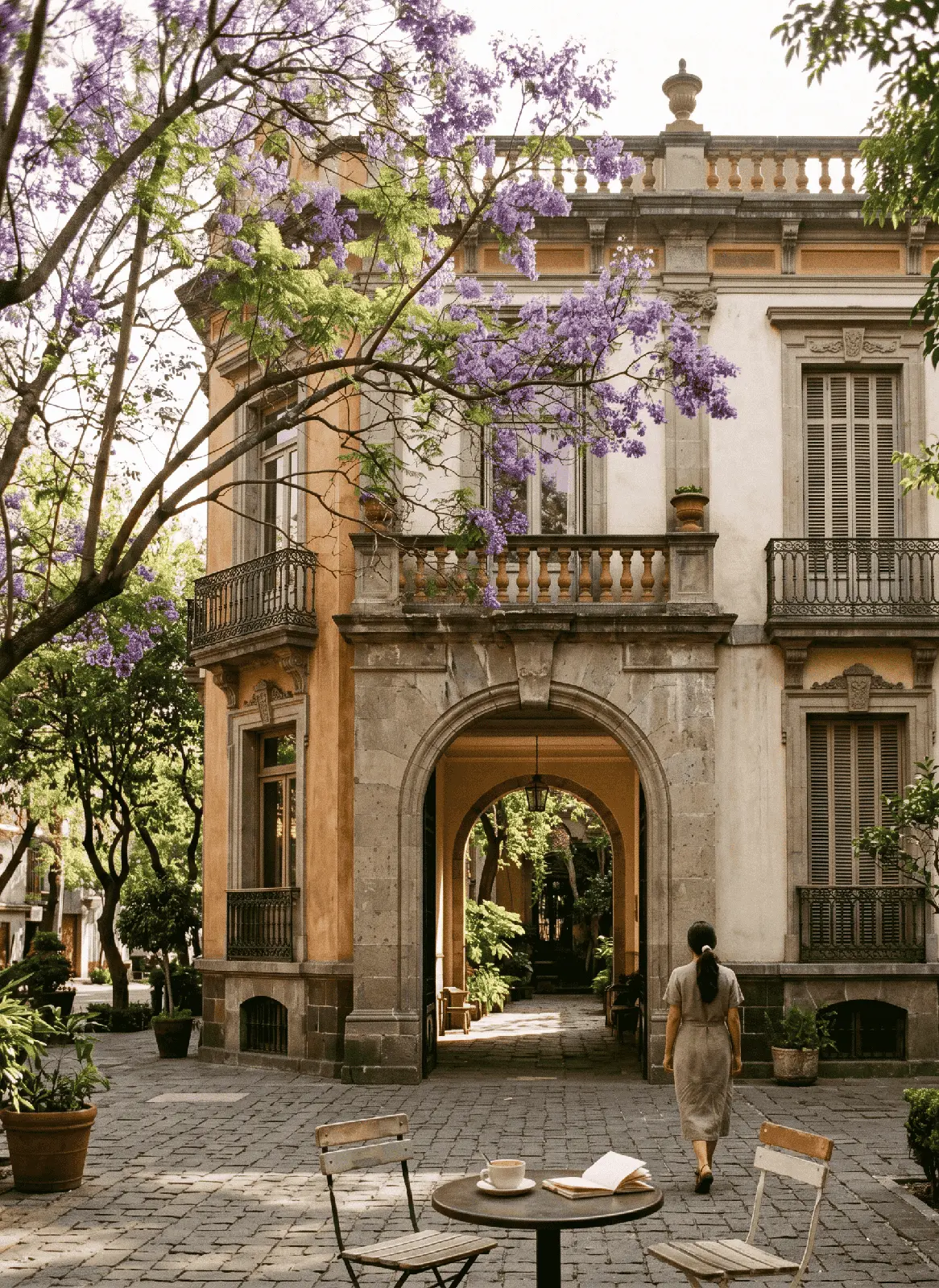
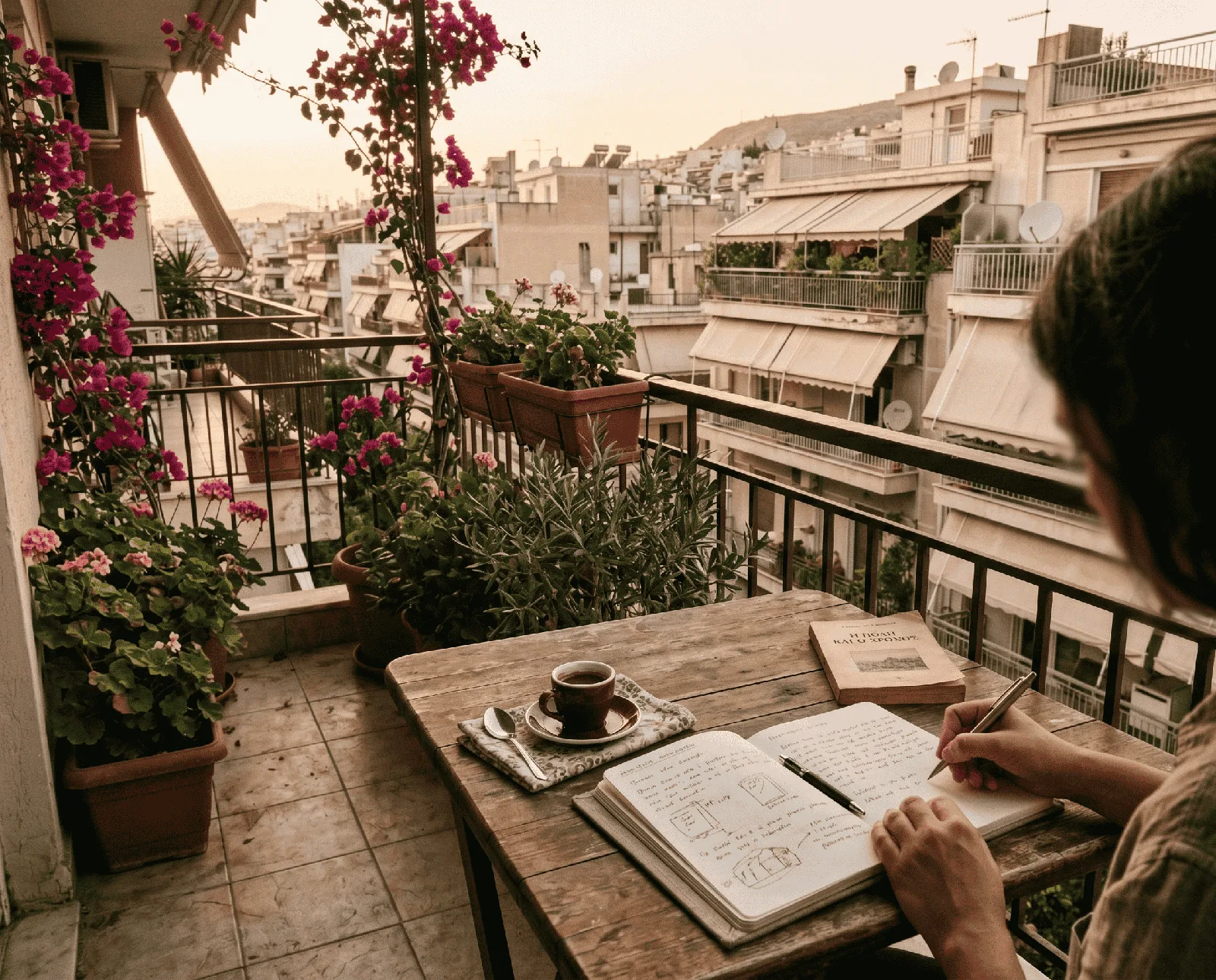
The rooms we go back to — or go back to in memory, when they are too far to return to in fact — are without exception the ones that showed their age. A clothesline apartment in Athens. A press room in Mexico City where the table still carried ink stains from a printmaking practice the previous tenant never fully cleaned up. A drafting table with its parallel rule worn smooth at both ends from decades of daily use.
None of these are luxury rooms. None of them have appeared in interior design publications. They are all, in the most literal sense of the word, lived in. And that livedness is precisely what makes them work.
A room with no memory asks you to make the first mark. That is, sometimes, too much to ask.