We seem to keep meeting cats. This is not a policy — it is the natural outcome of working in a lot of privately-owned rooms, because such rooms, in our experience, tend to contain cats at a higher rate than any other domestic animal, and the kind of person who lets a stranger work in their room tends, for reasons we have not fully worked out, to be a cat person.
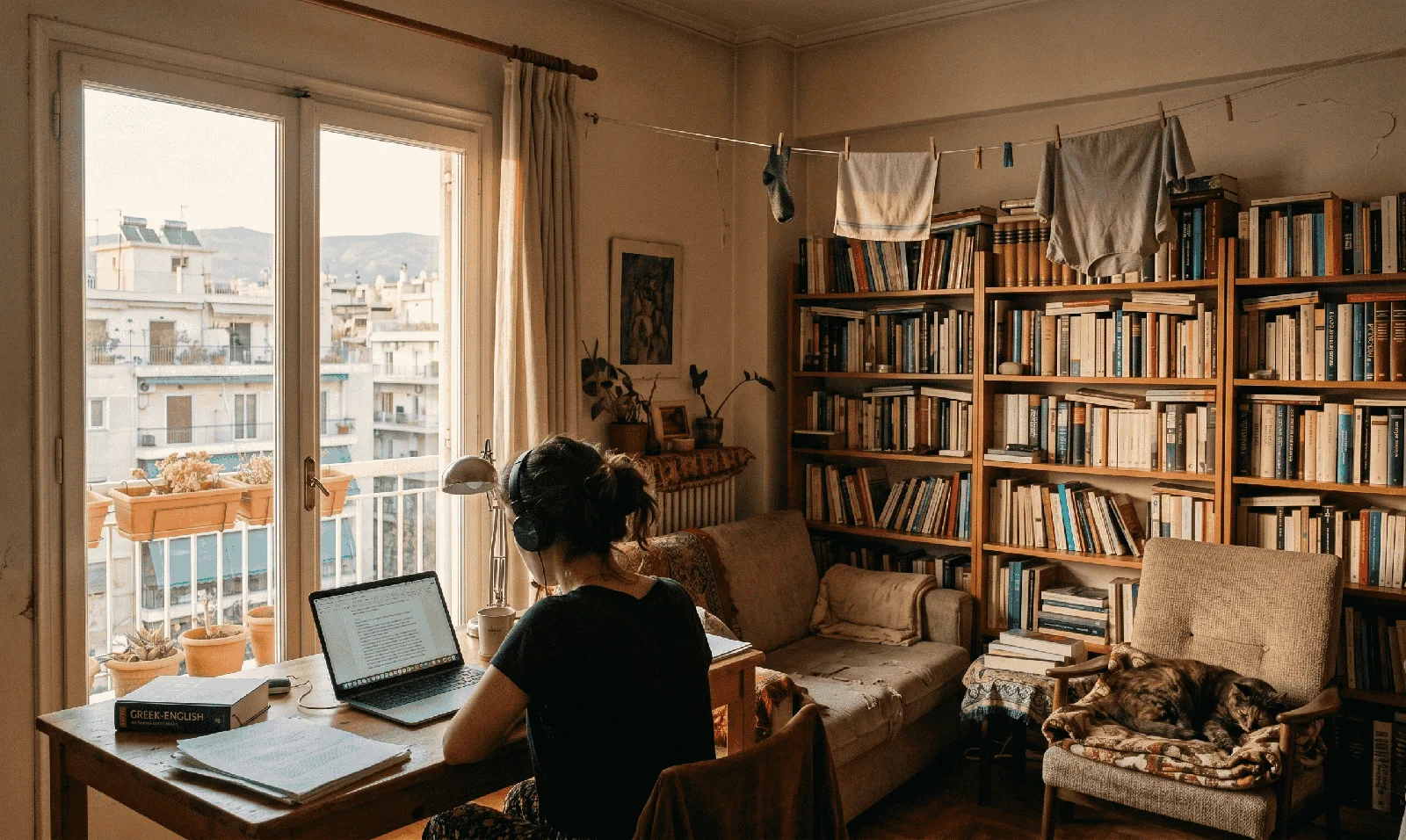
There is a cat in a painter’s studio in Alfama who has the rocking chair and does not share it. A fifteen-year-old cat asleep on the other chair in an apartment in Koukaki, specifically not available for interaction on request. A cat in a house in Glasgow who lives upstairs and is rarely encountered. A cat in a Victorian parlour who has appeared in the room, uninvited, more than once. A curious one in a study in Surulere who is not supposed to be in the study while you work. And an ownerless one in the Moda neighbourhood of Istanbul who lives on the street below a wooden house and is ambient rather than resident.
What the studio cat knows
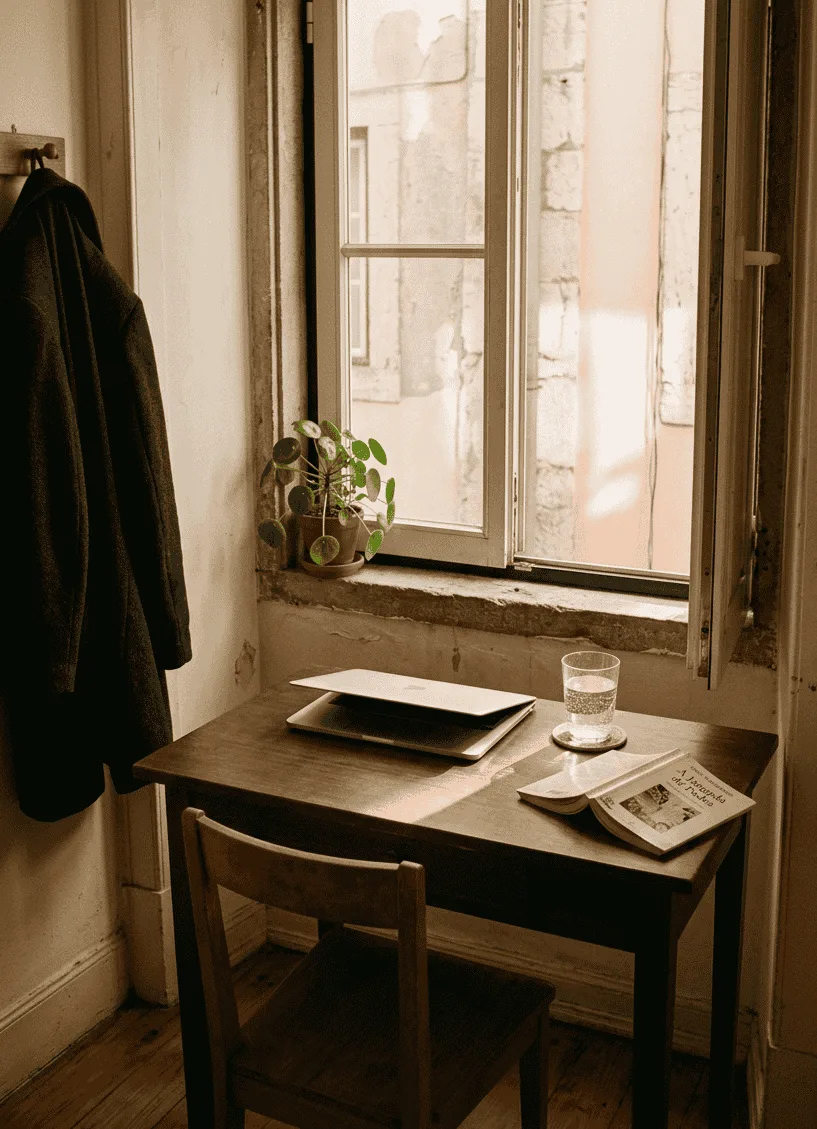
The cat in the Alfama studio is the one we mention most — not for any reason with an external referent, only that whenever we’ve worked there he ends up being the thing we remember. He has the rocking chair. He does not share it. People organise their whole working position around it. One of us once brought a separate small cushion, which he also chose.
What he knows, which is relevant to the room: the afternoon light. He is in the rocking chair when the west-facing windows are in shadow, and on the floor or the desk in the two or three hours when the light is at its best — when the studio is warmest, the light most golden, the work most likely to go well. He moves to intercept it. He has apparently been doing this for years. He is a more reliable indicator of the room’s best hours than any clock.
What the old cat knows
The cat in the Koukaki apartment is fifteen. She has been there through multiple tenants, several renovations, the arrival of the clotheslines and the departure of various pieces of furniture. She has, by every account, seen everything that has happened in that room. She sleeps on the other chair. She does not interact on request. She will, however, acknowledge someone who has worked quietly for about two hours and, in her assessment, earned it.
A cat in a working room is evidence that the room has been worth inhabiting for longer than you have known it. This is, in its way, a recommendation.
On cats as a quiet signal
We don’t treat cats as a criterion for anything. We have, though, noticed that the rooms with a resident cat tend to be the ones we remember most fondly. We’re not claiming causation. We’re only noting that the kind of person who makes a room good enough for a cat to choose tends also to make a room good enough to work in.
The studio cat chose the rocking chair. The old cat chose the other chair. The Glasgow one chose upstairs. None of these are arbitrary. Cats know which rooms are worth their time — and on that question, as on a few others, they may be better judges than we are.