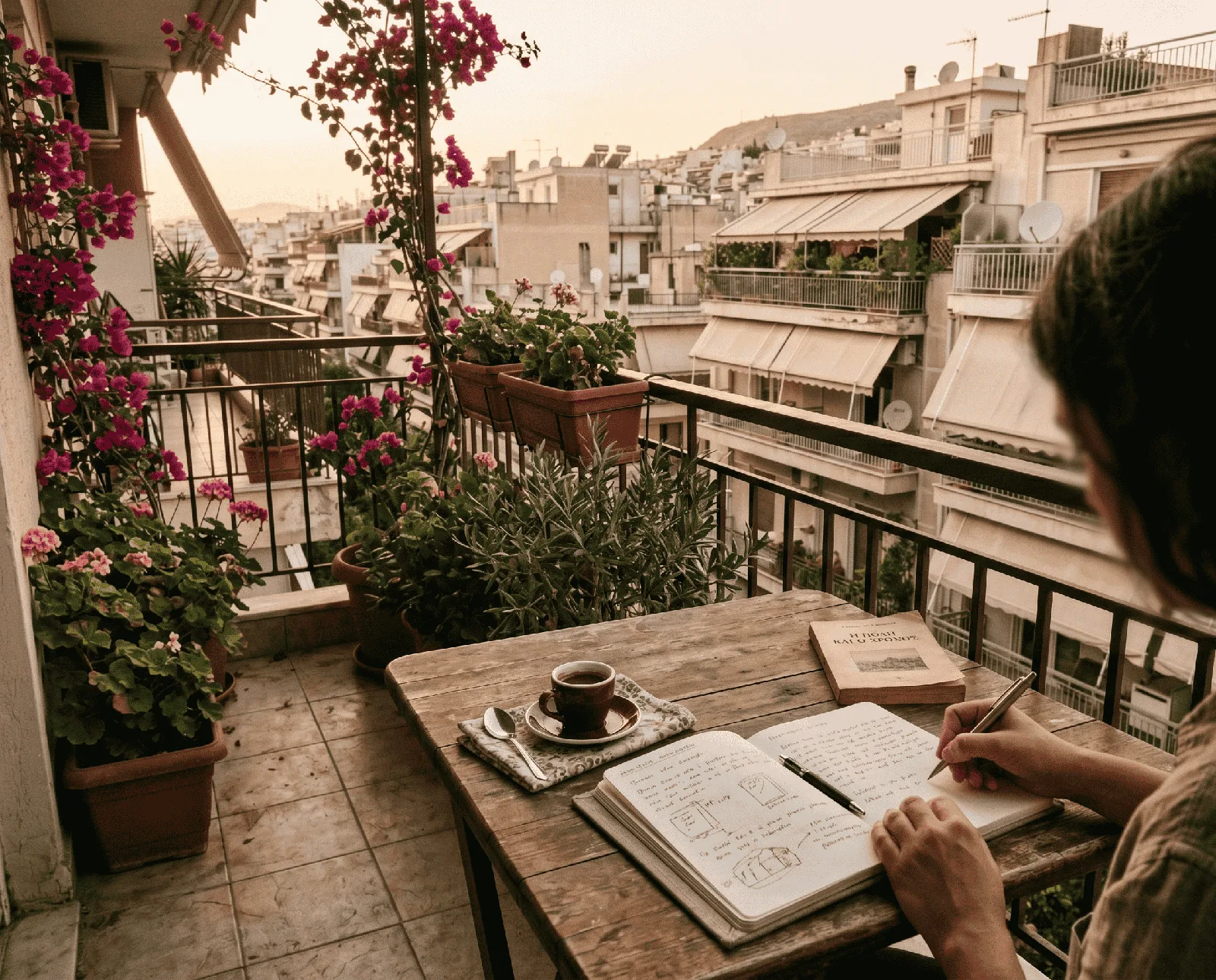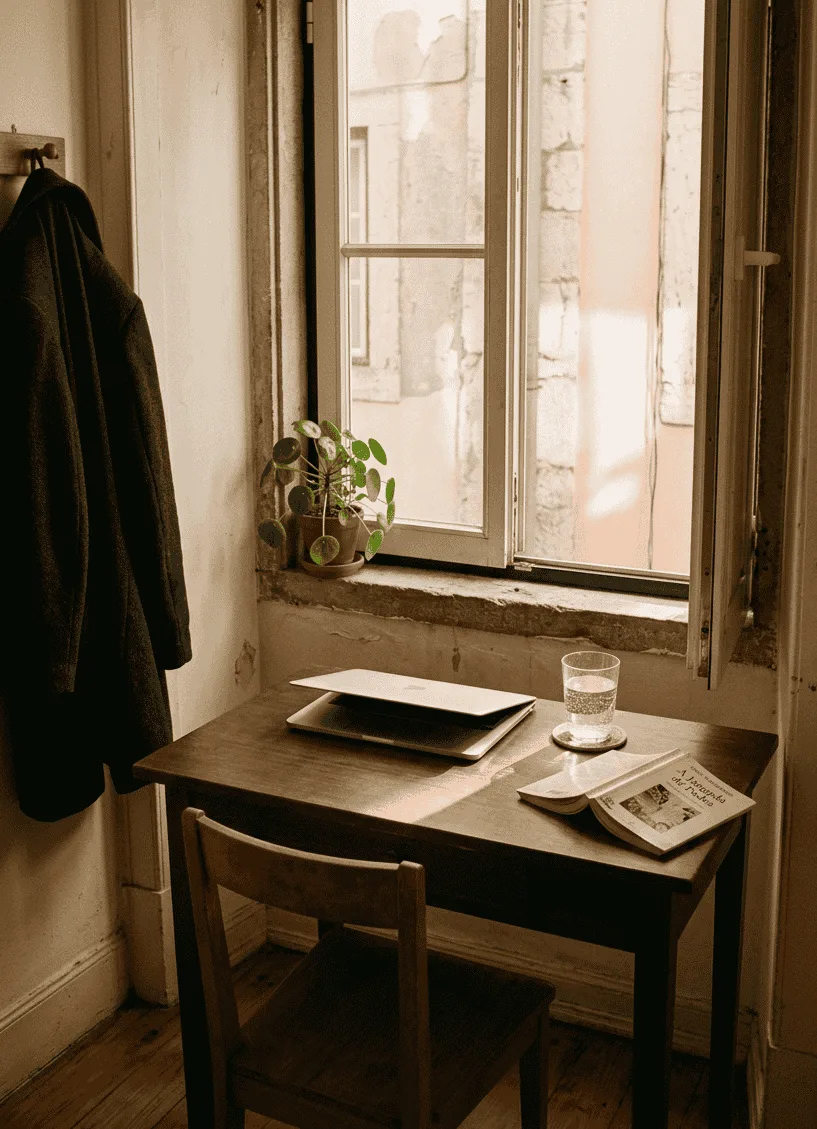
Every room we’ve worked in seems to have a season. Not a season in which it is somehow unavailable, but a season in which it is best — when the light arrives correctly, when the temperature of the city outside the window becomes a condition rather than an obstacle, when the particular qualities of the room are most themselves.
A converted scullery in Glasgow is a winter room. This is not a defect. The northern light in November — grey, diffuse, settling in through the high window at an angle that barely changes between nine and three — is the light that room was built for. Whenever we’ve worked there in winter, the same contained, focused attention shows up. In July, when the airshaft is stuffy and the light sharper and the window facing the neighbouring wall feels more like an absence of view than an invitation to look elsewhere, it is merely good. In November it is exceptional.
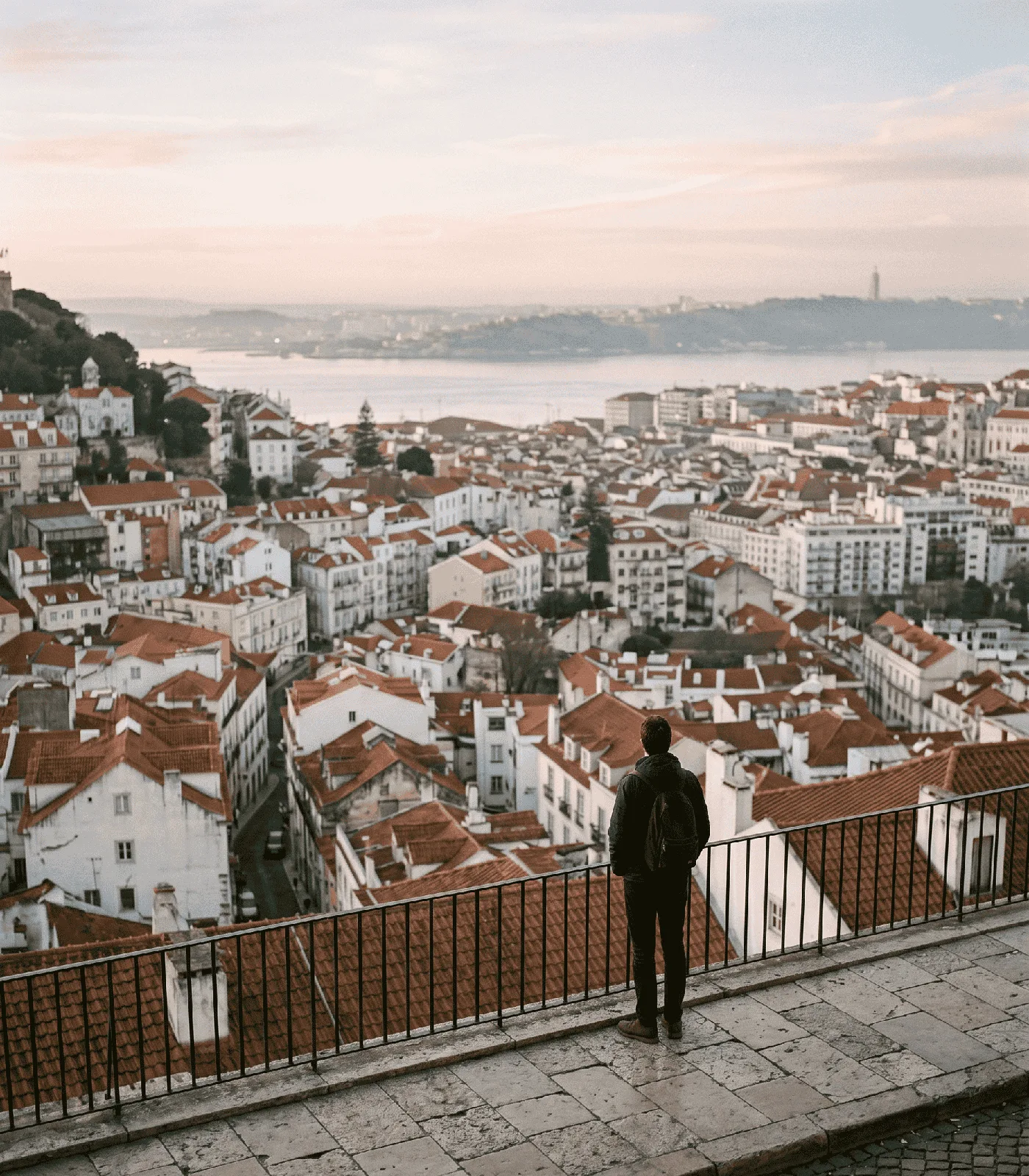
Alfama in October
A painter’s studio in Alfama is an autumn room — specifically October and November, when the west-facing windows take the low afternoon sun at exactly the angle that turns the oak floor to amber and the brushes in their jars into something like a still life you would pay to look at in a museum. In summer the same light is too direct. In winter it arrives too low and too briefly. In October it comes in for three hours in the afternoon, and it is, in the only word that fits, impossible.
Impossible to concentrate. Impossible to leave.
The courtyard rooms in spring
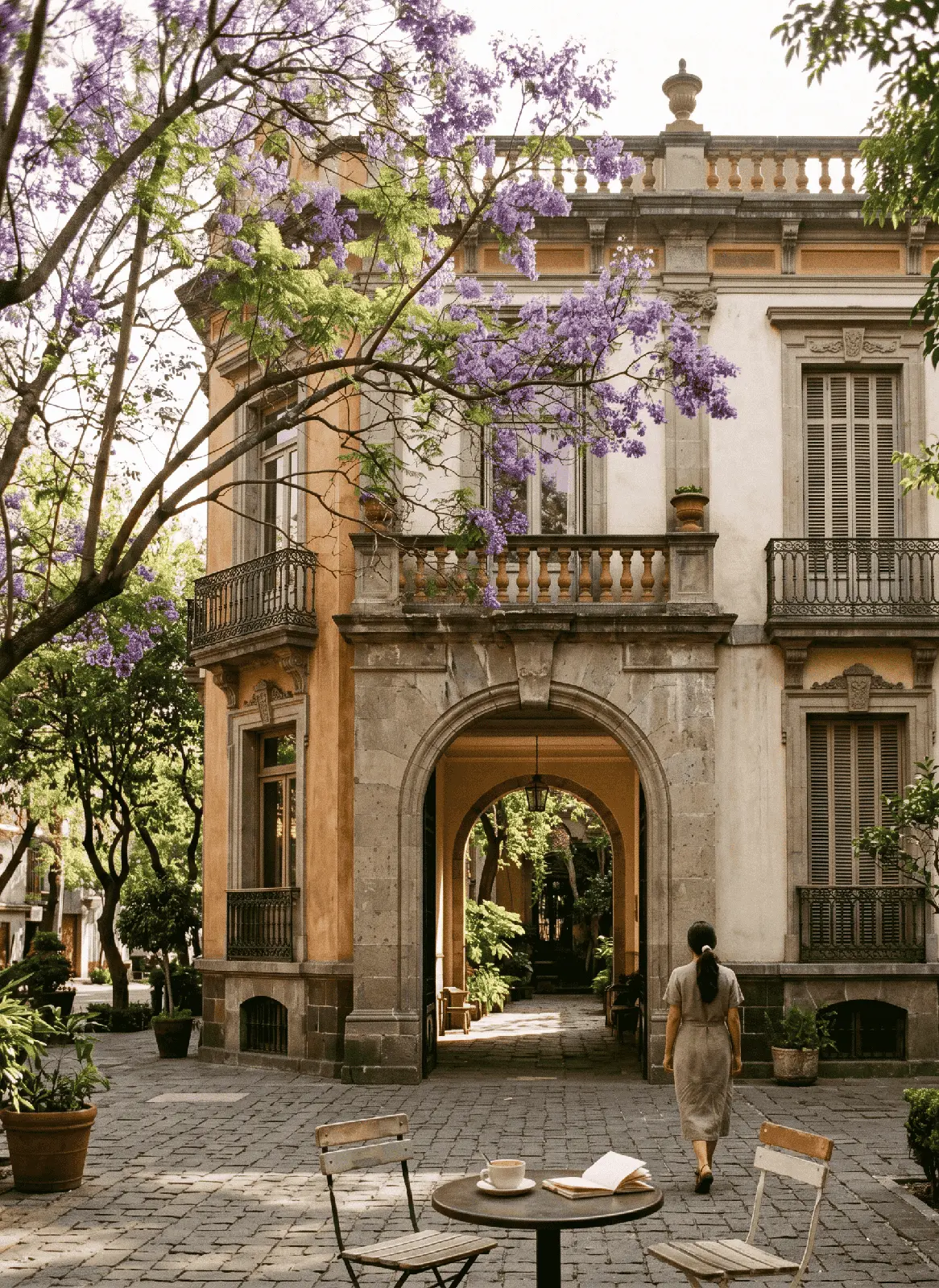
Two courtyard rooms we know in Roma Norte have, in spring, an asset that exists in no other season: jacaranda. The purple flowers of the jacaranda trees that line the streets in March and April drift through the entrance arches and collect in the courtyards below. Both rooms overlook those courtyards. For a few weeks each spring they are, quietly, the best rooms in the city — and then the flowers go and they are ordinary again.
A room has seasons the way a person has moods — not better or worse, simply different, and the work you do in them takes on the character of the season in which it was done.
On the value of a bad season
The season in which a room is not at its best is also instructive. A timber-framed house in the Moda neighbourhood of Istanbul is a summer and autumn room. In February, when the wind comes off the Marmara and the walls creak with more volume and less charm, it is still a good room — just a different one. The work you do there in February tends to be the finishing kind rather than the beginning kind. The uncomfortable season is for finishing.
This is not a theory we invented. It is just a pattern we keep noticing, in our own notes, which are the only record we actually trust.