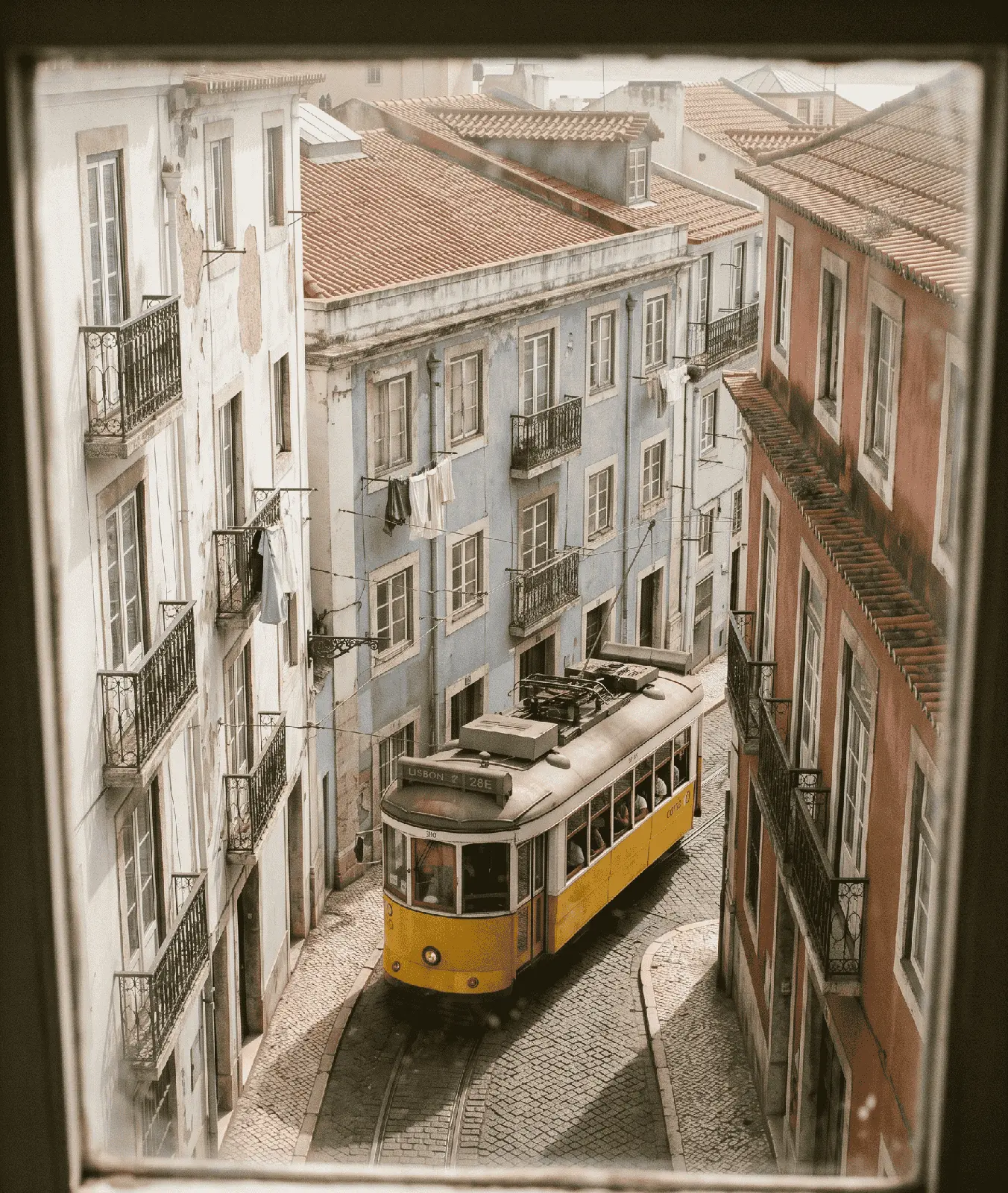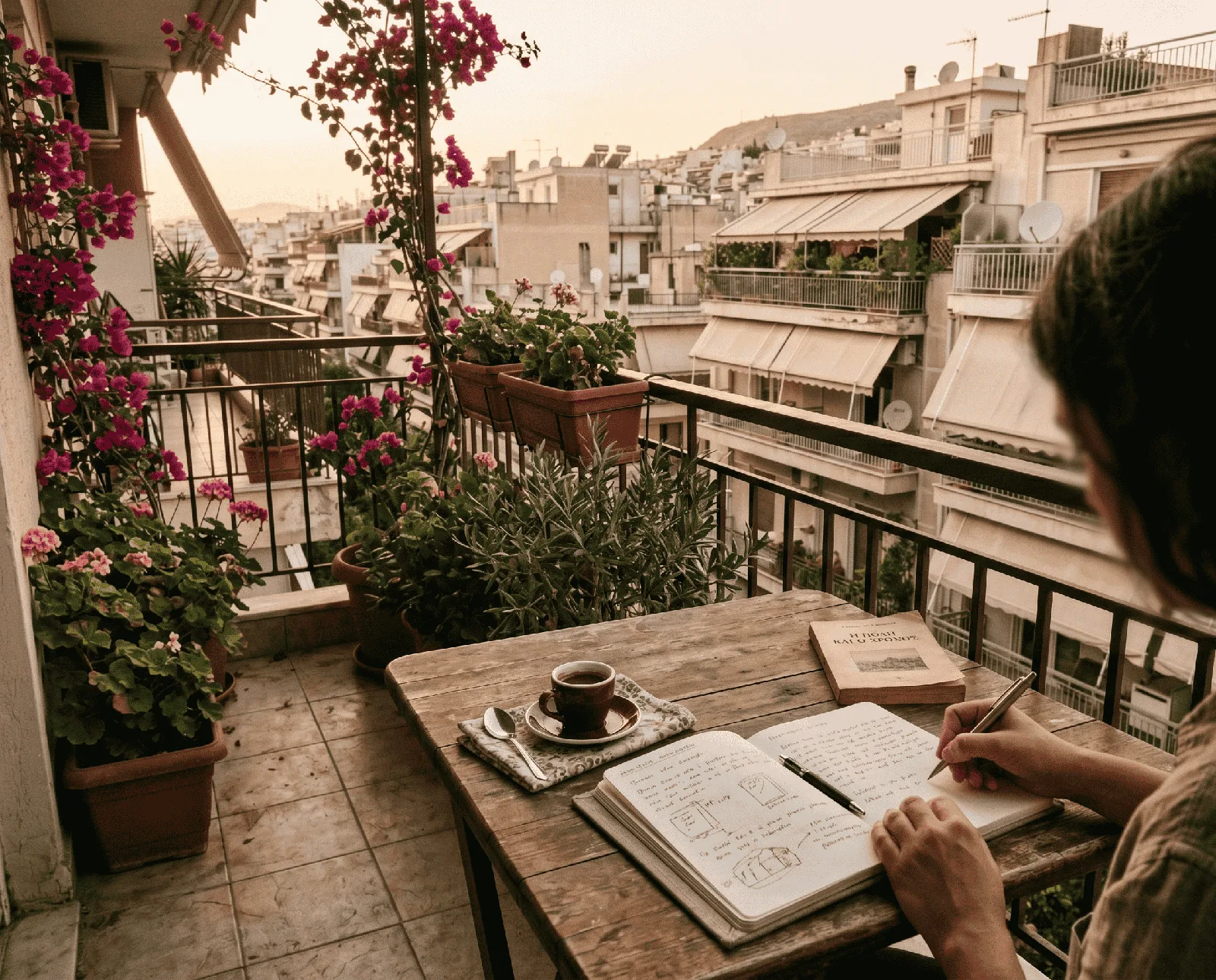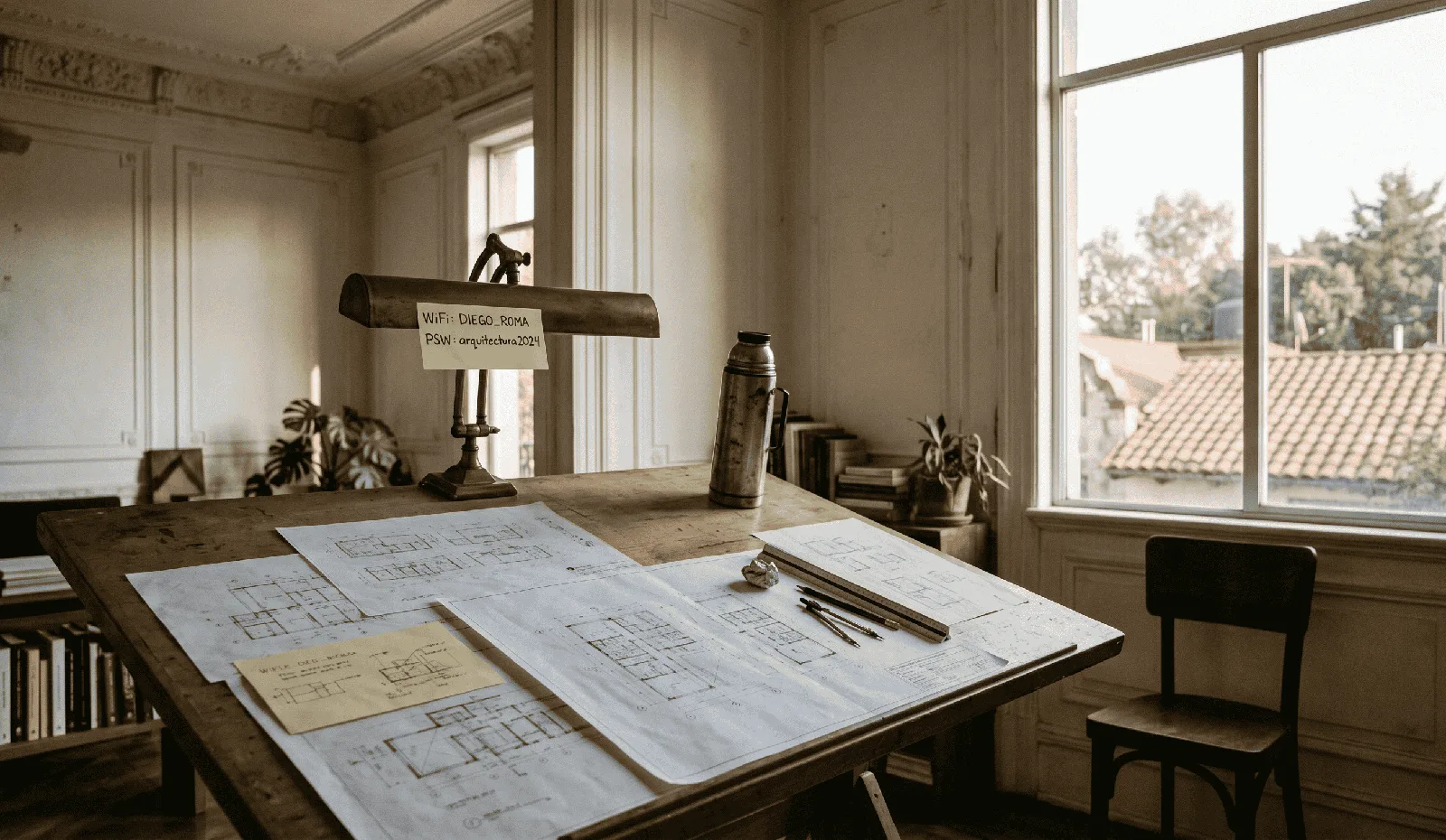
The desk by the window is an object of near-universal aspiration. Interior photographs in every magazine and every listing site position the workspace at the window as though this were self-evidently correct — as though the view, whatever it is, constitutes a necessary part of the working environment. We have come to doubt this. More than doubt it: we have become quietly convinced that for most kinds of difficult work, the desk that faces the wall is the superior arrangement.
This is not a popular position. When FlexSlice describes a space, and the desk turns out to face a wall rather than a window, there is always a note in the listing to explain it — to preempt the disappointment that the best working position in the room is not the photographically appealing one. But we have stayed in enough rooms, and worked at enough windows, to have formed a view.
The problem with views
The view is a form of promise that the room keeps making, all day, whether you are ready to receive it or not. A window onto a courtyard in Mexico City, or onto a canal in Glasgow, or onto a narrow Ottoman street in Istanbul, is a genuinely beautiful thing. But beauty, encountered repeatedly over the course of a working day, is a distraction that does not announce itself as one.
When you look up from a difficult sentence and your eyes fall on a blank wall, you return to the sentence. When you look up from the same difficult sentence and your eyes fall on a street scene — the fruit seller across the way, the cat on the terrace opposite, the particular arrangement of light on old stone at three in the afternoon — you do not return to the sentence immediately. You look at the street for a moment. The moment extends. The sentence waits.
This is not laziness. It is simply how attention works. The view is interesting, and the sentence is, at this precise moment, difficult, and the mind will take the path of less resistance without your consciously deciding to let it. The wall offers no such path. The wall is, from a cognitive-competition standpoint, neutral.
The view is the room making a promise it cannot keep for eight consecutive hours. The wall is the room declining to make promises, which is its own kind of kindness.
On the geometry of enclosure
There is also something to be said for the physical experience of facing a wall at close range. It is enclosing in a way that proves, once you have experienced it, to be conducive to a particular quality of inward attention. The world narrows to the surface in front of you — the wall, the lamp, whatever notes or objects you have arranged in your immediate field of vision — and this narrowing, which might seem oppressive, turns out in practice to be clarifying.
Architects who study workspace design have noted this for some time. The concept has a name in some traditions — the alcove, the carrel, the nook — and what all these arrangements share is a deliberate reduction of the visual field available to the person working. The monastery cell, the library carrel, the scholar’s corner: all of them face the wall, or something close to it. There is a reason these arrangements persist across centuries and cultures. They work.
In a borrowed room in Bangkok — a desk pushed against the far wall of a narrow room, a single lamp on the left, white plaster close enough to touch — the longest sustained period of work in any city in recent memory happened on a Tuesday afternoon in November. No view. No light except the lamp. The wall was, if we are being precise, not entirely blank: there was a small calendar and a postcard of somewhere in the north. But they were fixed and did not move, and after the first hour they ceased to register as objects and became simply part of the wall. Which became simply the edge of the world available to the work.
A note on what the window is actually for
None of this is to say the window is useless. The window, in a borrowed room, serves several genuine functions that the wall cannot provide. It gives you the light by which you see. It gives you the city’s ambient sound, which in most places and at most times is preferable to silence for work that requires a degree of background activation. It gives you something to look at when you take a deliberate break — when you have finished a section, or a task, or a difficult hour, and you need to let your eyes rest and your mind decompress for five minutes before the next thing.
The window is for the breaks. The wall is for the work. The desk that faces the window is, in this reading, configured for the breaks rather than for the work — which explains why it photographs so beautifully and performs less consistently than you hope.
When a FlexSlice listing notes that the desk faces the wall, this is not a caveat. It is a recommendation.